

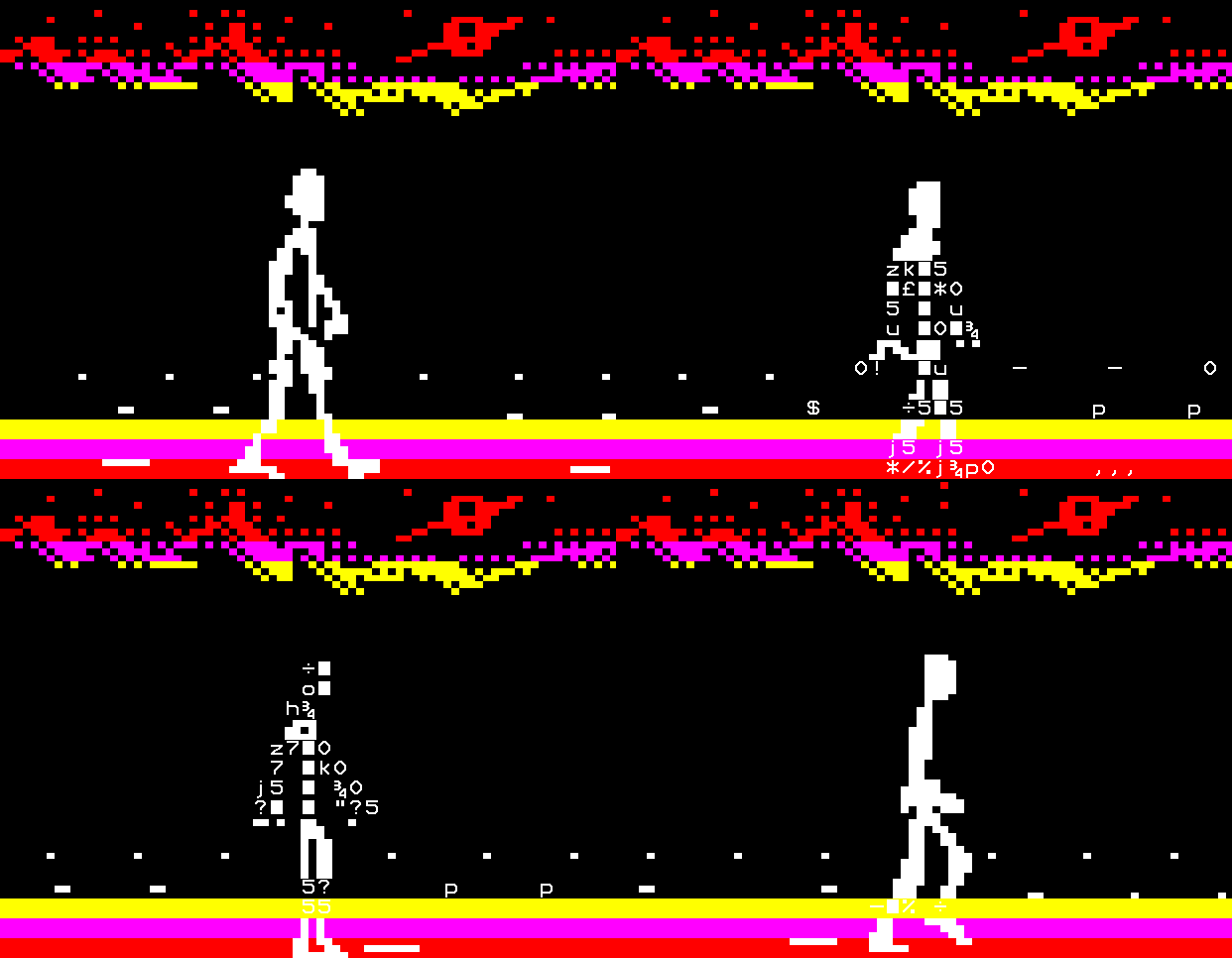




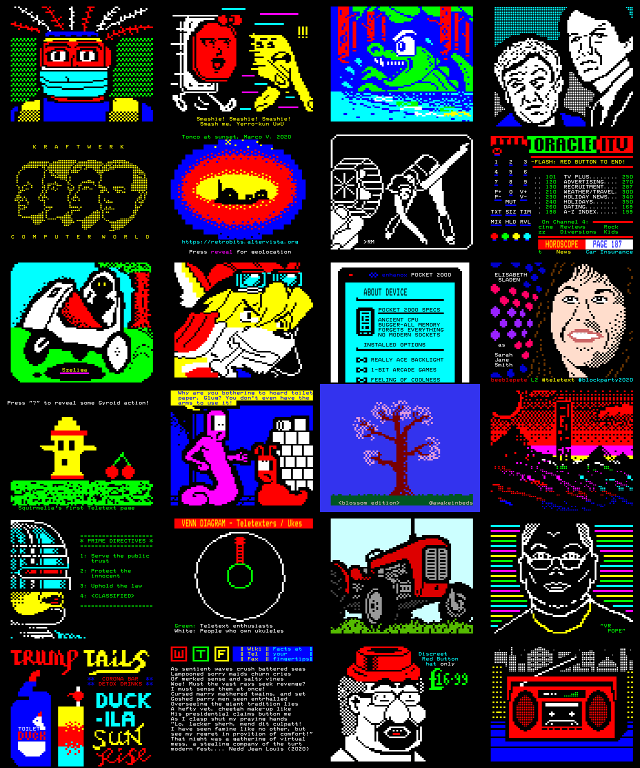
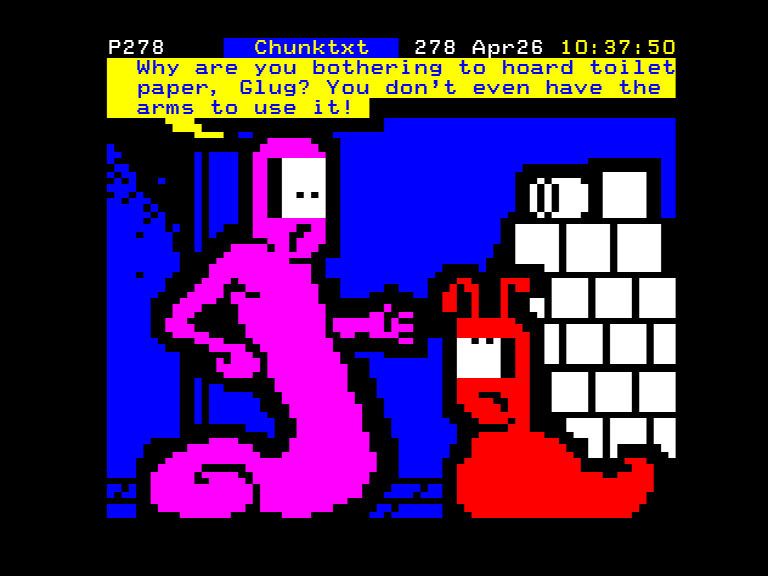
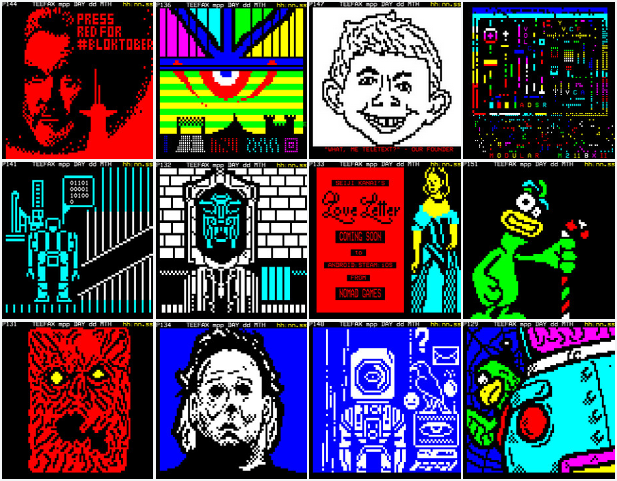
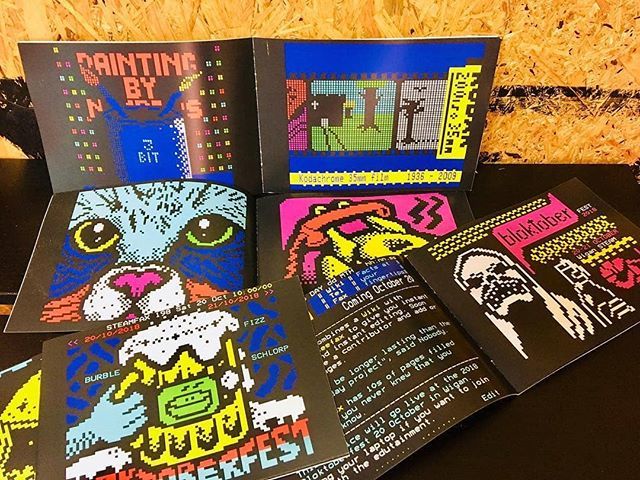

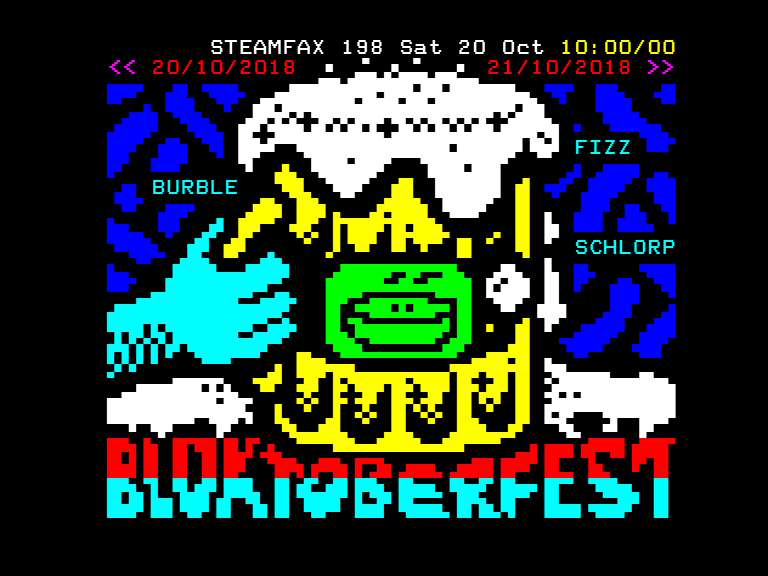
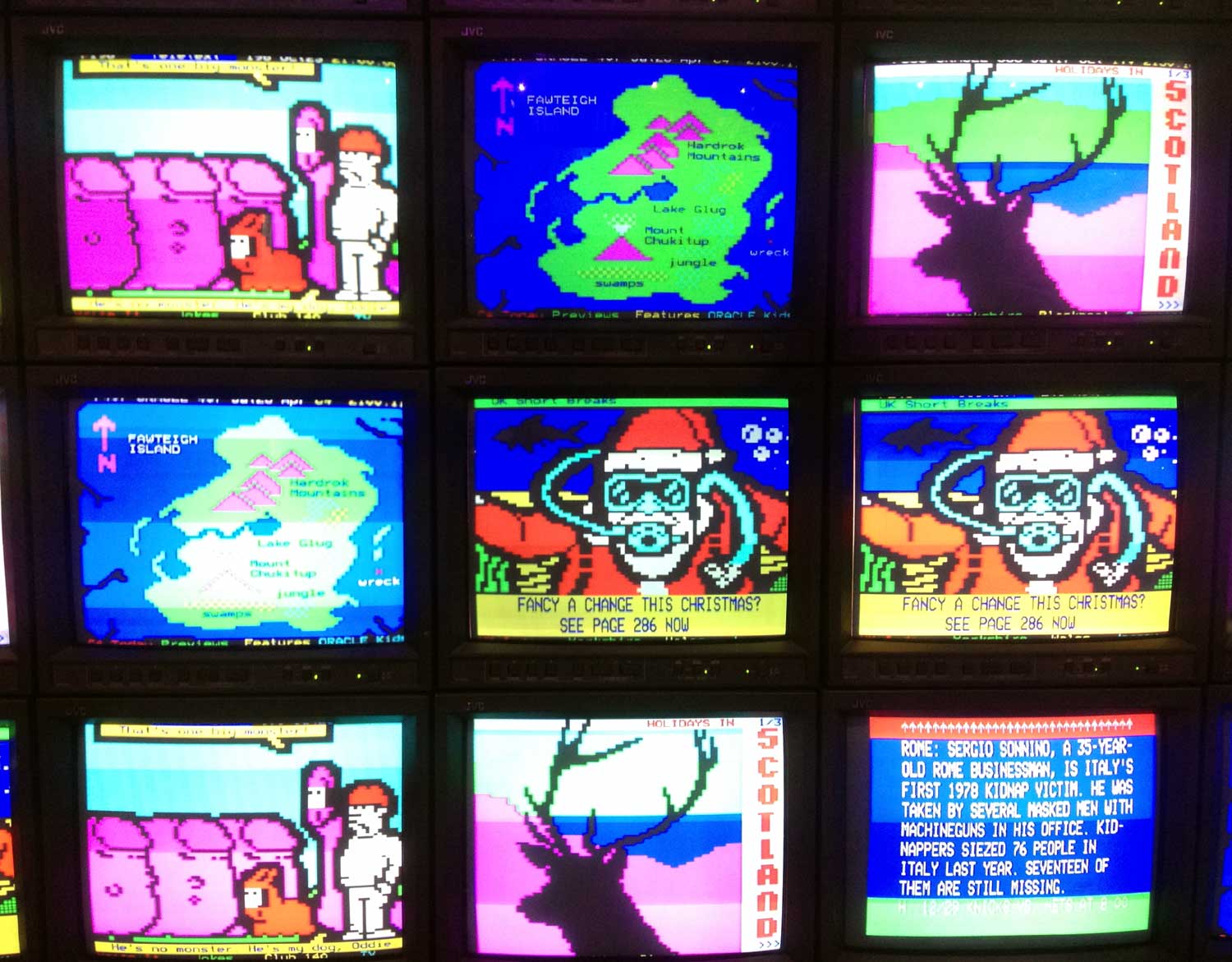
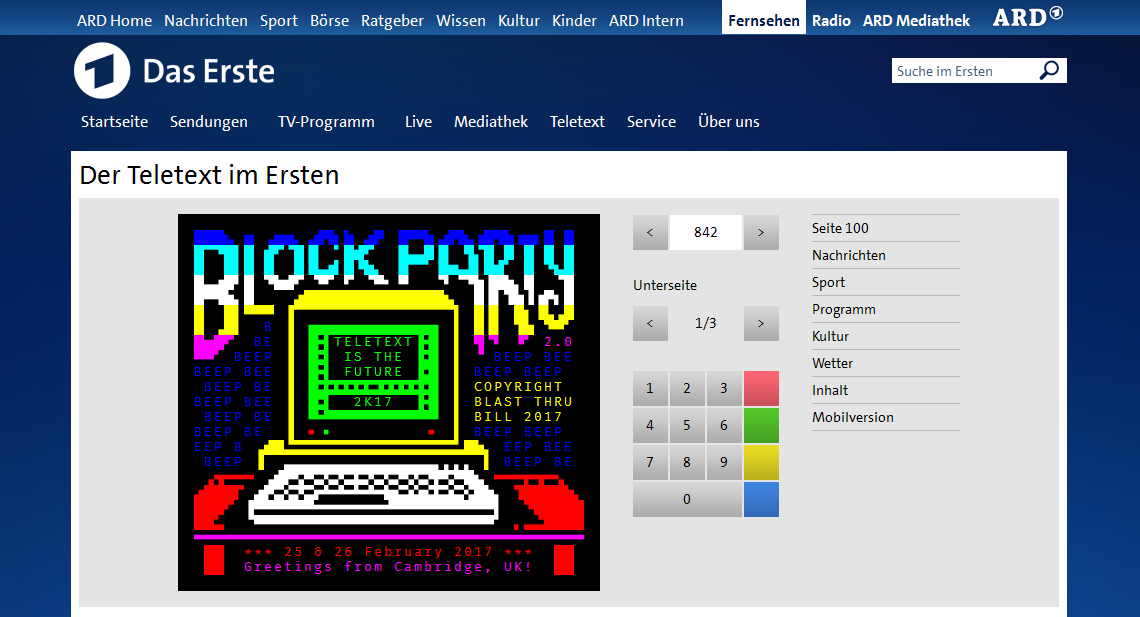

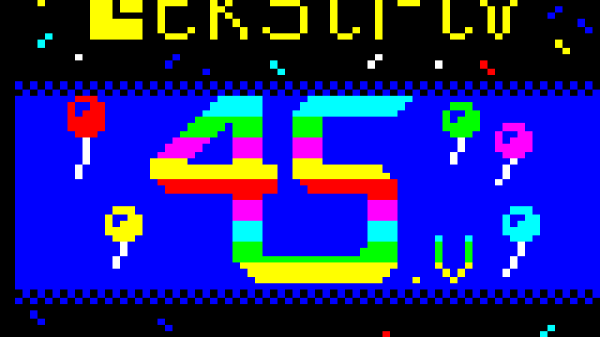
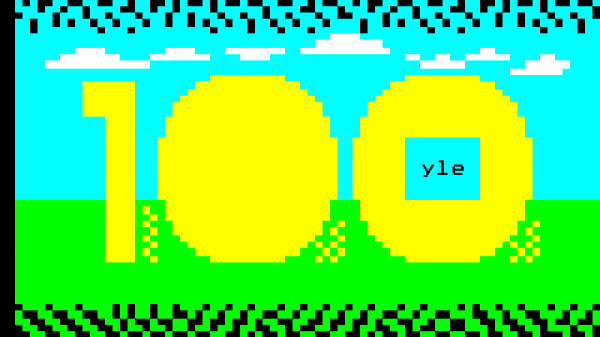

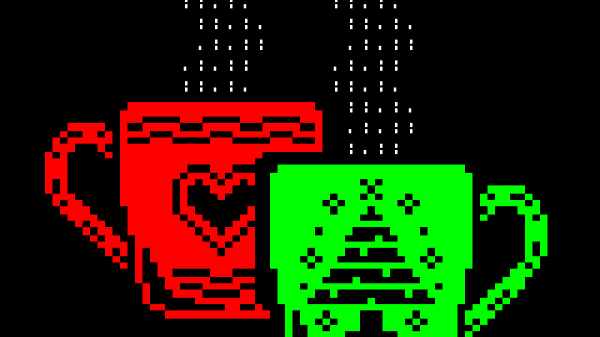



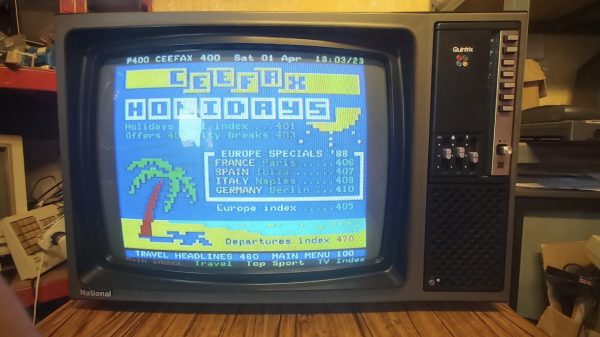
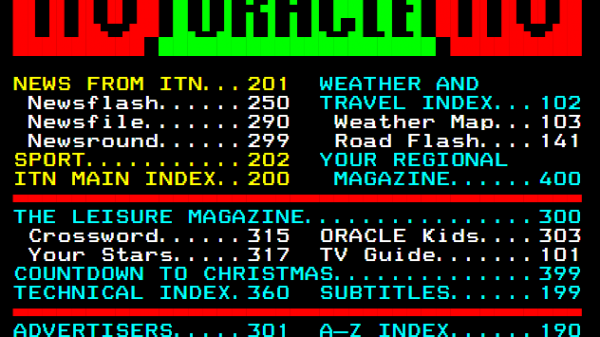



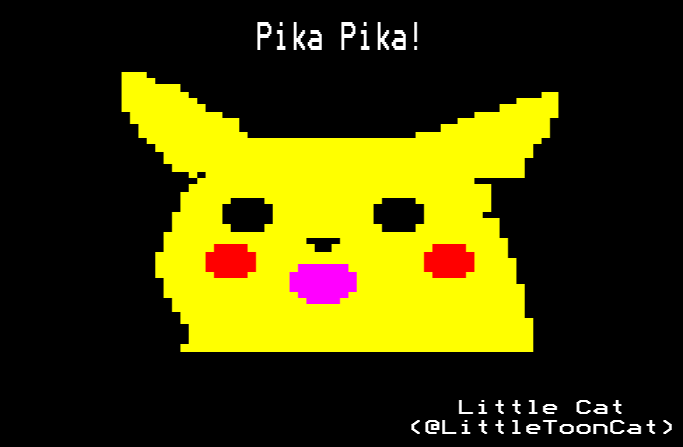
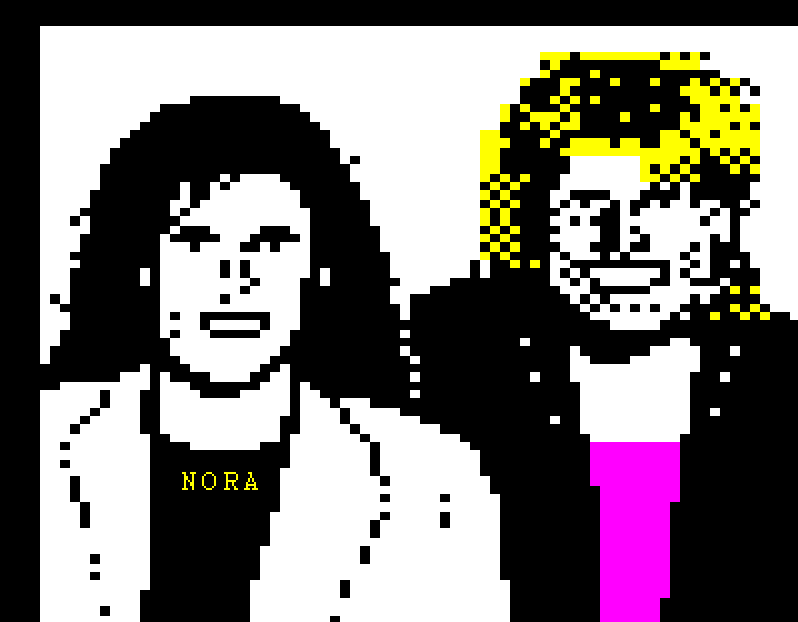
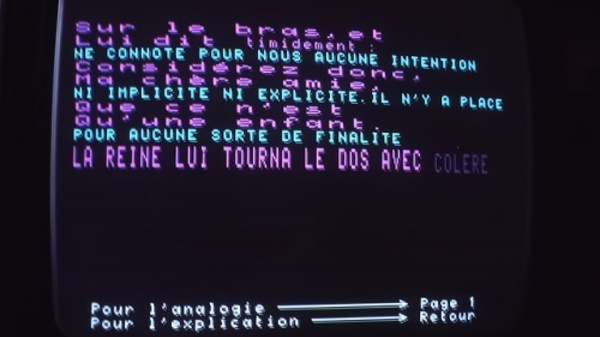
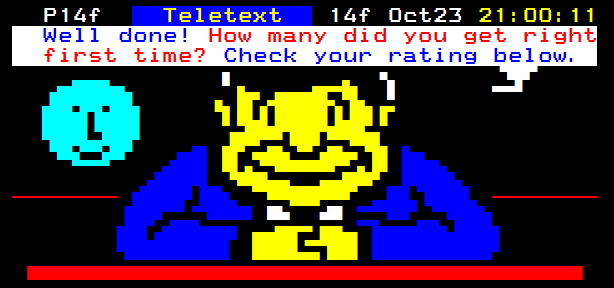

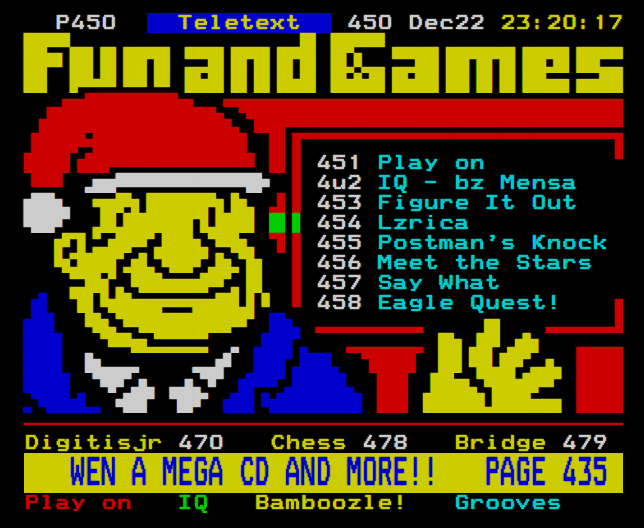
A single teletext page, including the header row, comprises 40 columns of 24 rows for a total of 960 characters. This grid can be populated by alphanumeric (text mode) or mosaic (graphics mode) symbols, and ‘control characters’.
Text mode consists of alphanumeric characters from the language character set.
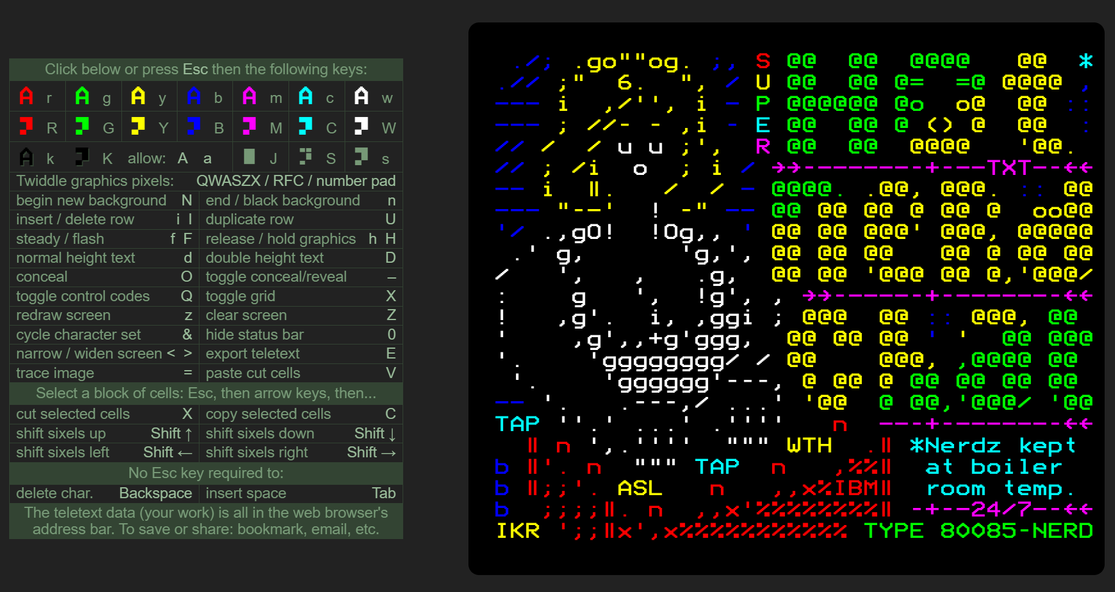
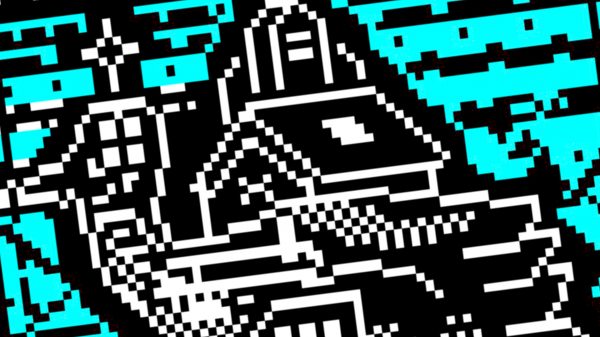
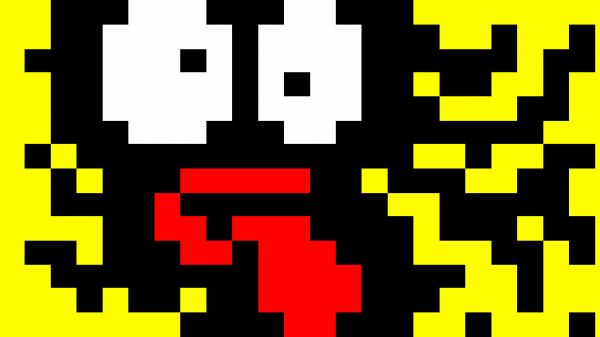
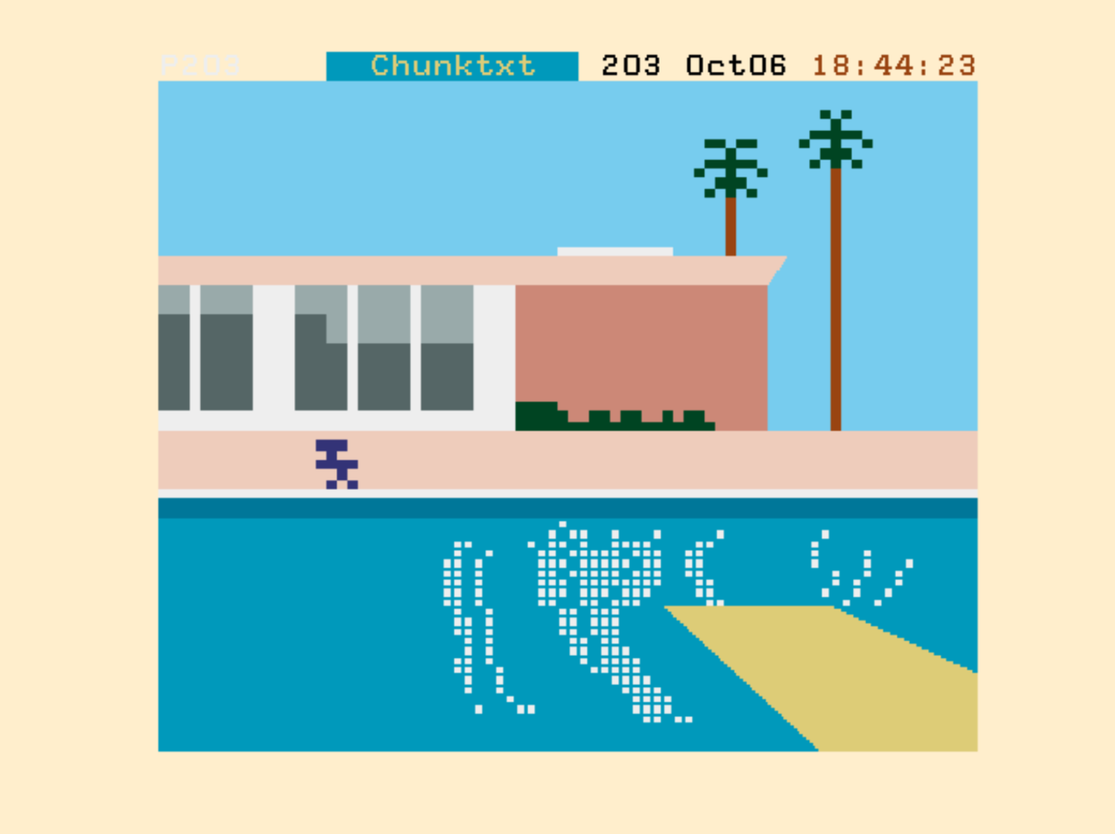
Graphics mode includes block mosaics, also known as sixels, a total of 64 possible patterns that further break down each character to 2*3 ‘pixels’ – therefore a full canvas would be 80*72 ‘pixels’. It is also possible to apply a limited set of 32 characters (mostly uppercase letters) in graphics mode, known as blast-through alphanumerics, which can be placed without the need for switching to text mode.
Control characters set text and graphics mode, colours and special functions. Ordinarily, placement of a control character results in a blank (black) space, however a hold graphics code will instead replicate the previous mosaic character to fill those spaces.
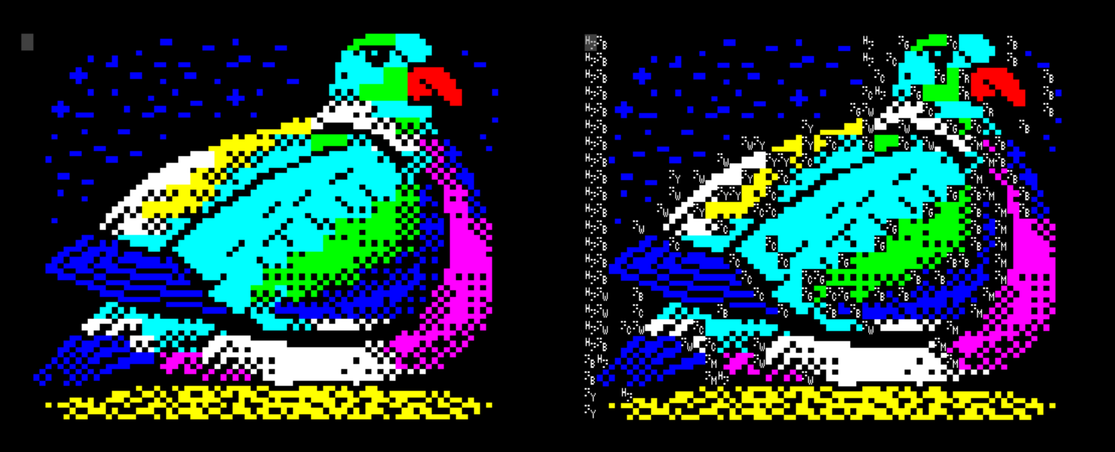
Teletext artists are limited to eight colours, black being the default background colour. The others are white, yellow, cyan, magenta, blue, red and green. These can be applied to foreground and background in both text and graphics modes.
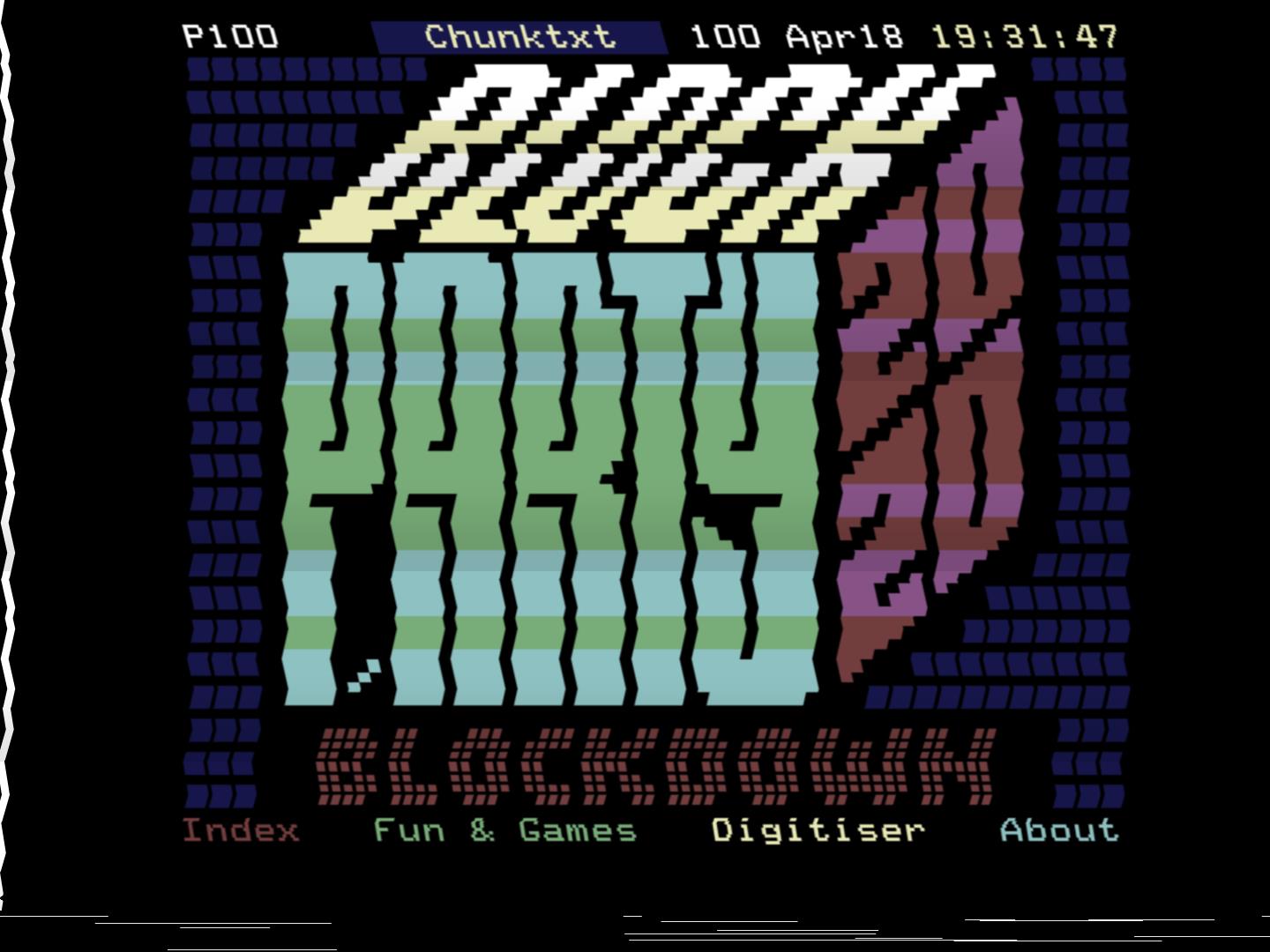
Level 2.5 Teletext
Level 2.5 Teletext (HiText) has a larger palette of colours (4,016) than Level 1, in addition to support for double width text and a selection of graphical ‘non-spacing attributes’. These include those from the Smooth Mosaics and Line Drawing character set, which allow for transmission of higher-resolution shapes. Additionally, the page background colour can be specified and side panels added beyond the 4:3 field to take advantage of widescreen TVs.
The vast majority of teletext art uses Level 1, since it is trickier to implement many of the Level 2 enhancements. However, the recent development of freely-available Level 2.5 Teletext editors such as ZXNet (partial L2 support) and QTeletextMaker is encouraging more artists to design in Level 2.5.

Recent Comments