
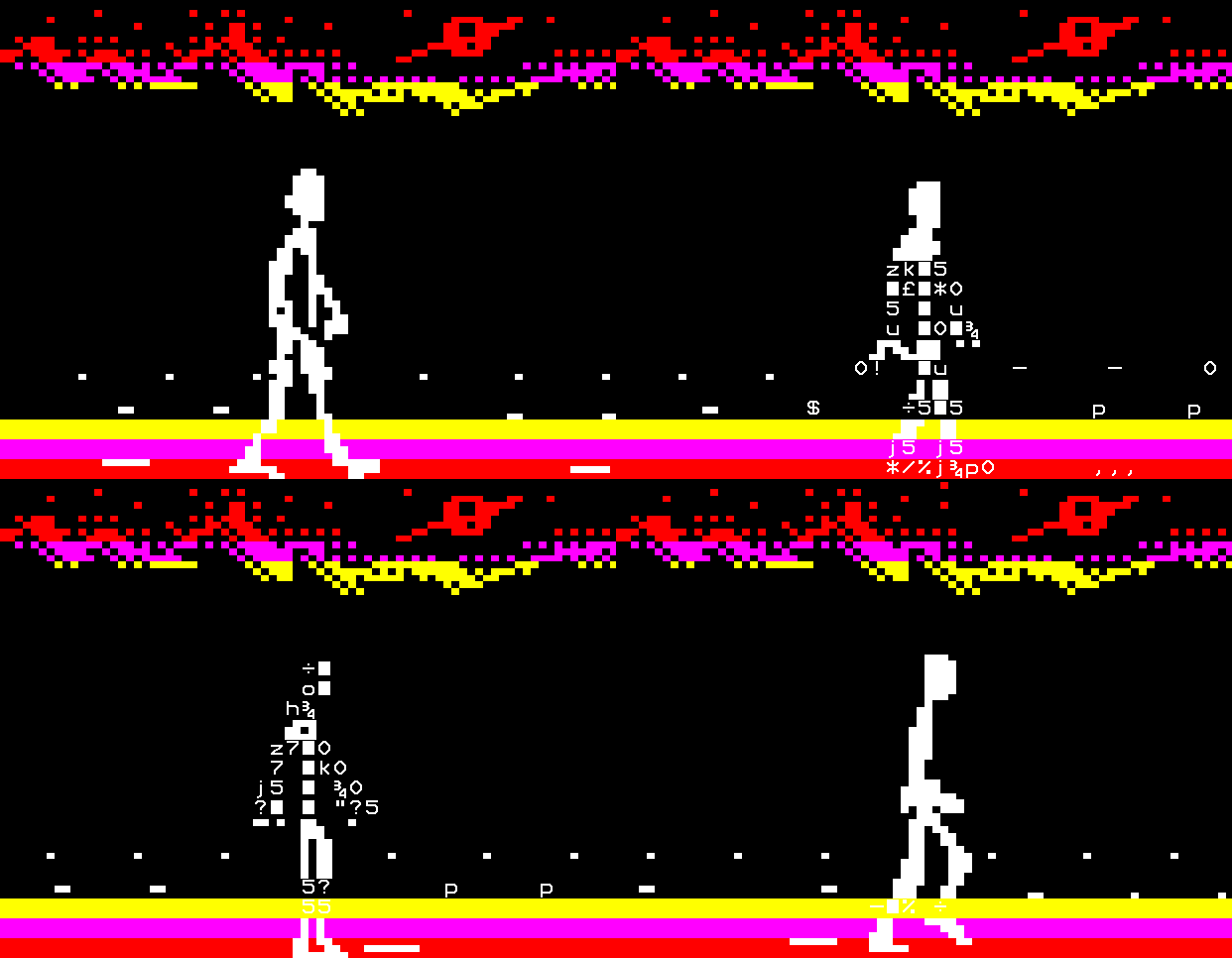







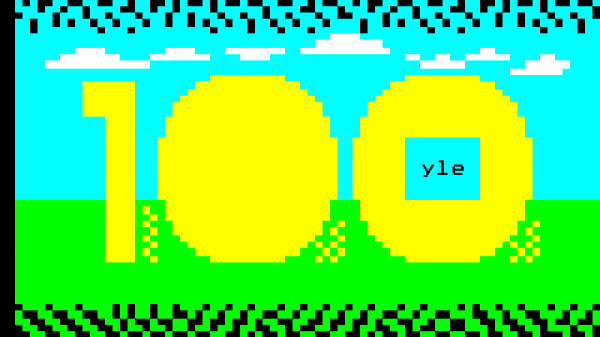

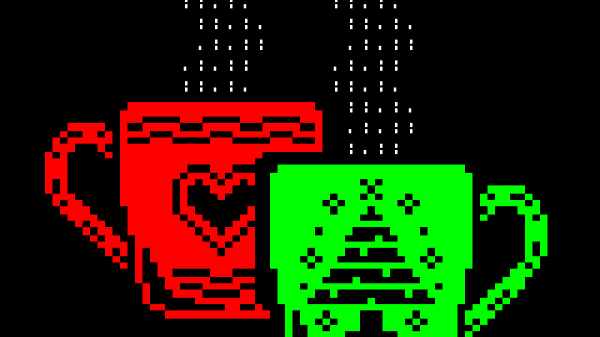



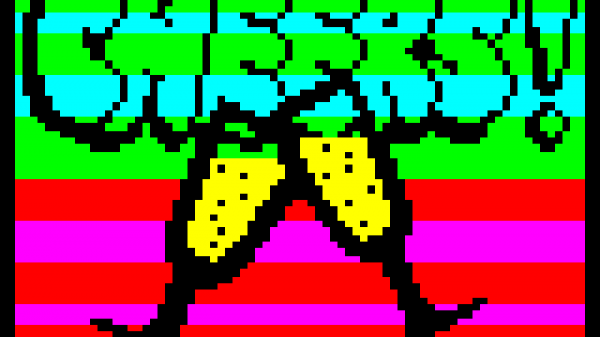
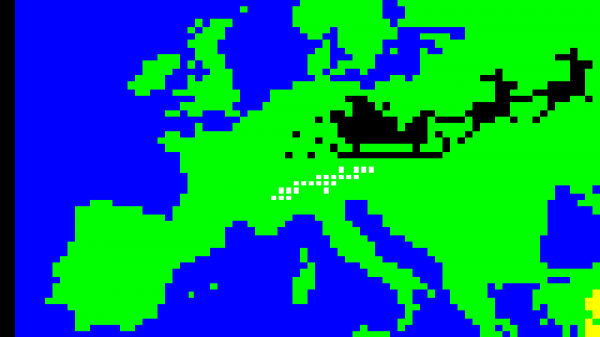
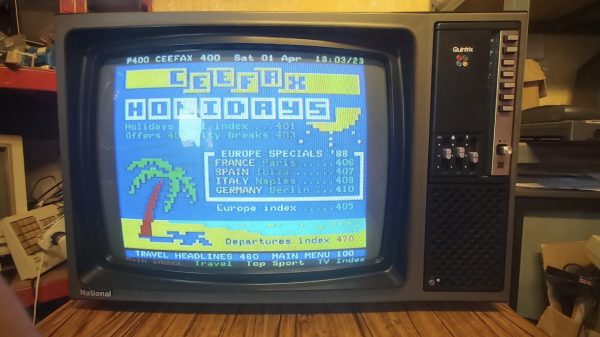





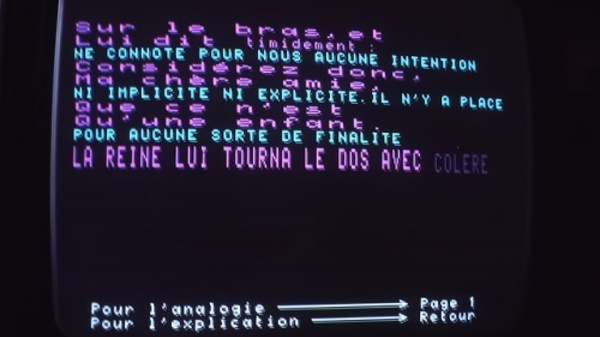

In 1980, the BBC began their Ceefax In Vision transmissions, later known as Ceefax AM and Pages From Ceefax.
Due to the fact these were broadcast as a TV programme unbound by teletext’s standard carousel sub-page rotation times, there was the capability to feature animated elements. One screening of Ceefax In Vision from 1982 closed with a 20-frame animation of a hand pulling down a sign saying “You have been watching Ceefax In Vision”.
Chicago’s WFLD Channel 32 was among the first to adopt the broadcast teletext format in the United States, implementing Keyfax in 1981. Their in-vision service, Nite Owl, featured a variety of animations including a rocket launching, a door opening, a UFO landing and a tap running. Most of these were designed by Mort Smith, who had been offered the job in America while working at Ceefax.
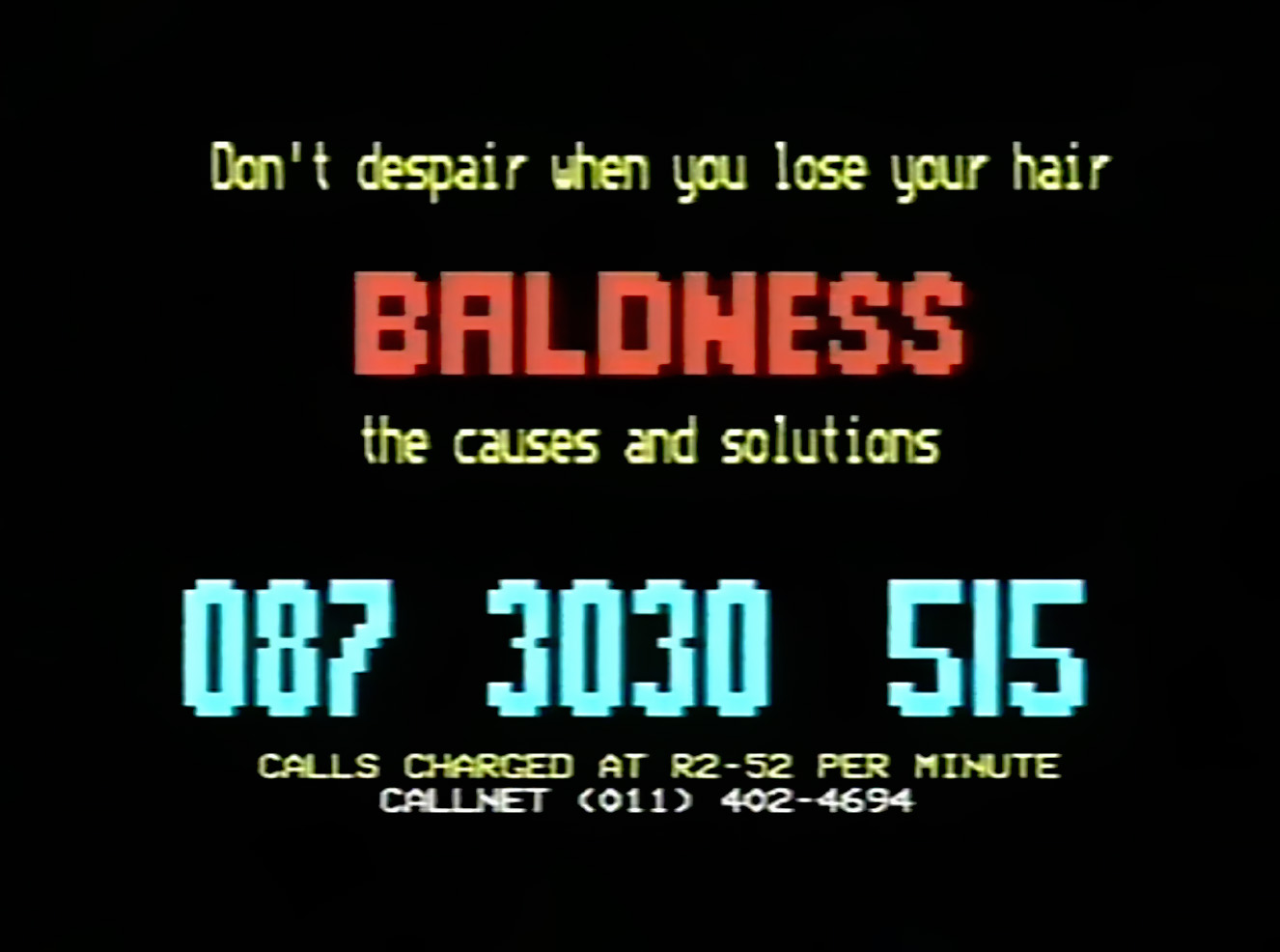
In November 1985, South African public broadcaster SABC launched Teledata and its accompanying in-vision service to be screened when the channel was off-air. Set to popular music of the day, Teledata in Vision carried commercial pages with simple artworks and pixel lettering to advertise businesses. A 10-second spot cost R250 (£11) per week, described by SABC as “one of the best media bargains around.”
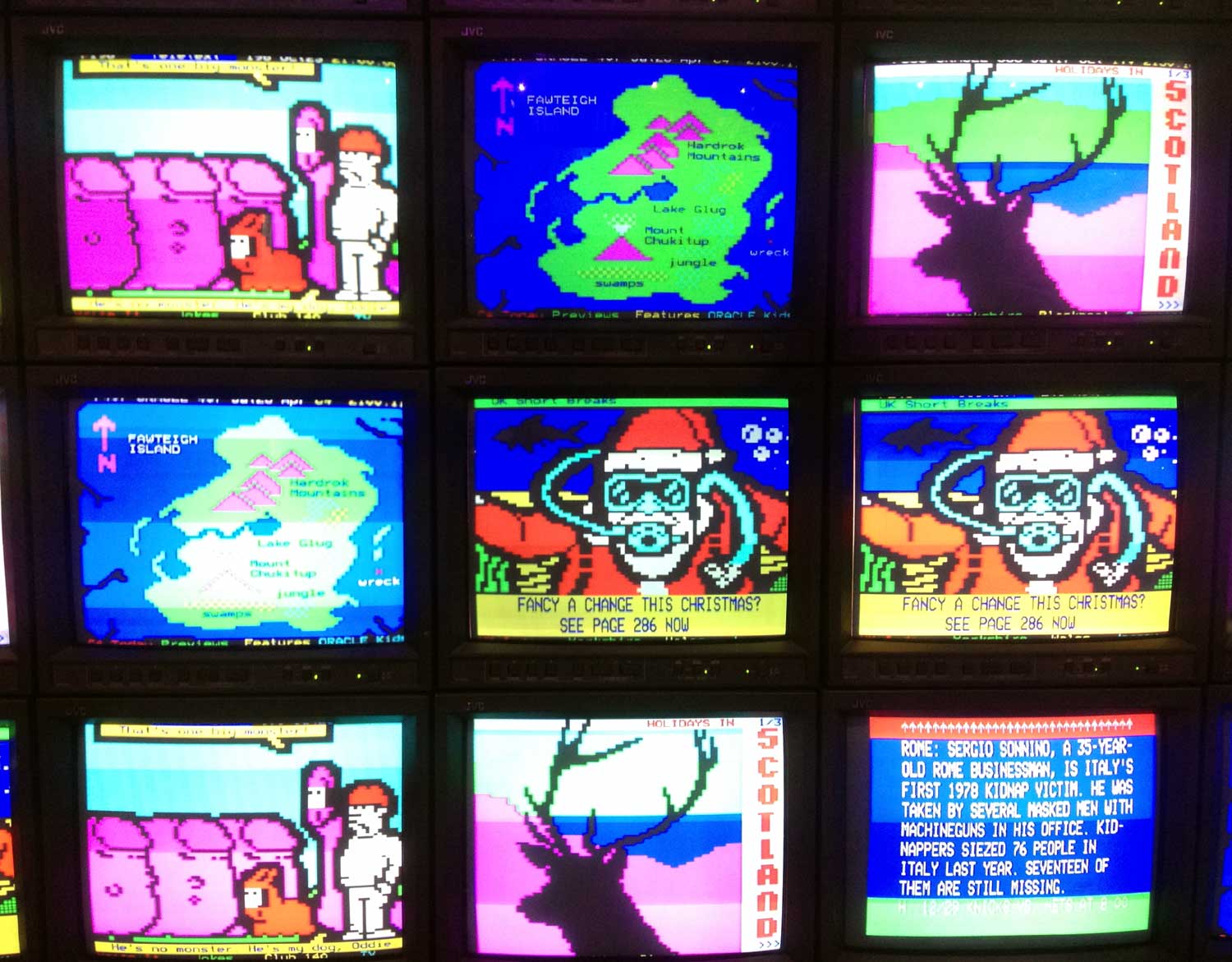
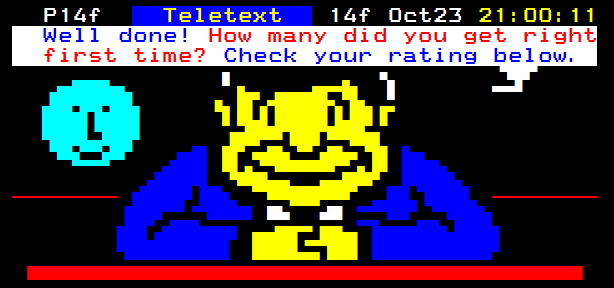
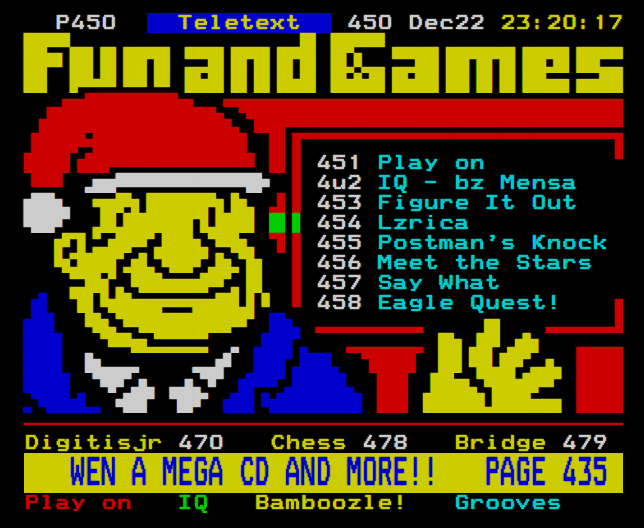
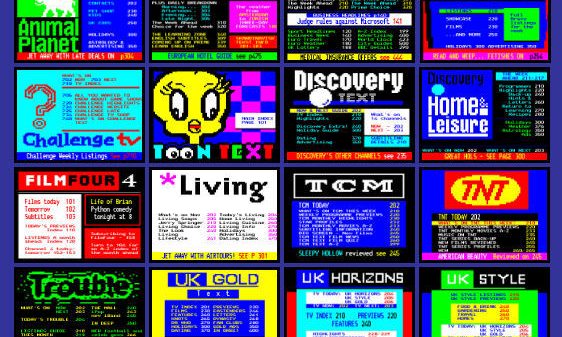
In the second half of the 1980s, Channel 4’s 4-Tel on View in-vision programme began to feature animated elements such as welcome messages, section transitions and credits by Ian Irving.
They grew increasingly complex as the ’90s approached, including more ambitious efforts such as a box folding and a small figure messily painting the word ‘comedy’ onto a black teletext background. These characters would become a staple of 4-Tel on View, frequently appearing to aid with scene transitions.
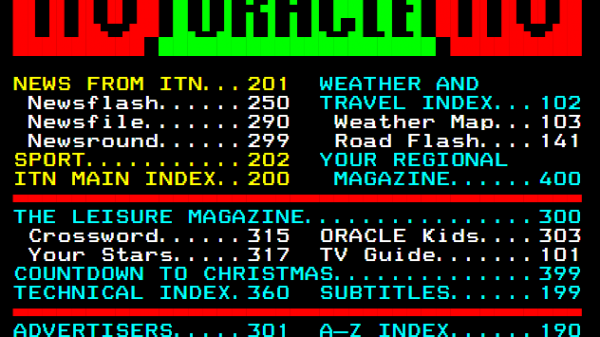
ORACLE on View, the news-orientated sister broadcast to 4-Tel on View, also included animations, with one of a newsreader exasperated by an ORACLE news headlines page rising up from the ground.
Level 2 tests
Level 2 Teletext was never introduced to British services due to cost and the fact viewers would have had to purchase new Level 2 compatible televisions, though the BBC and IBA did use it for some some in-vision programmes.
Central Job Finder
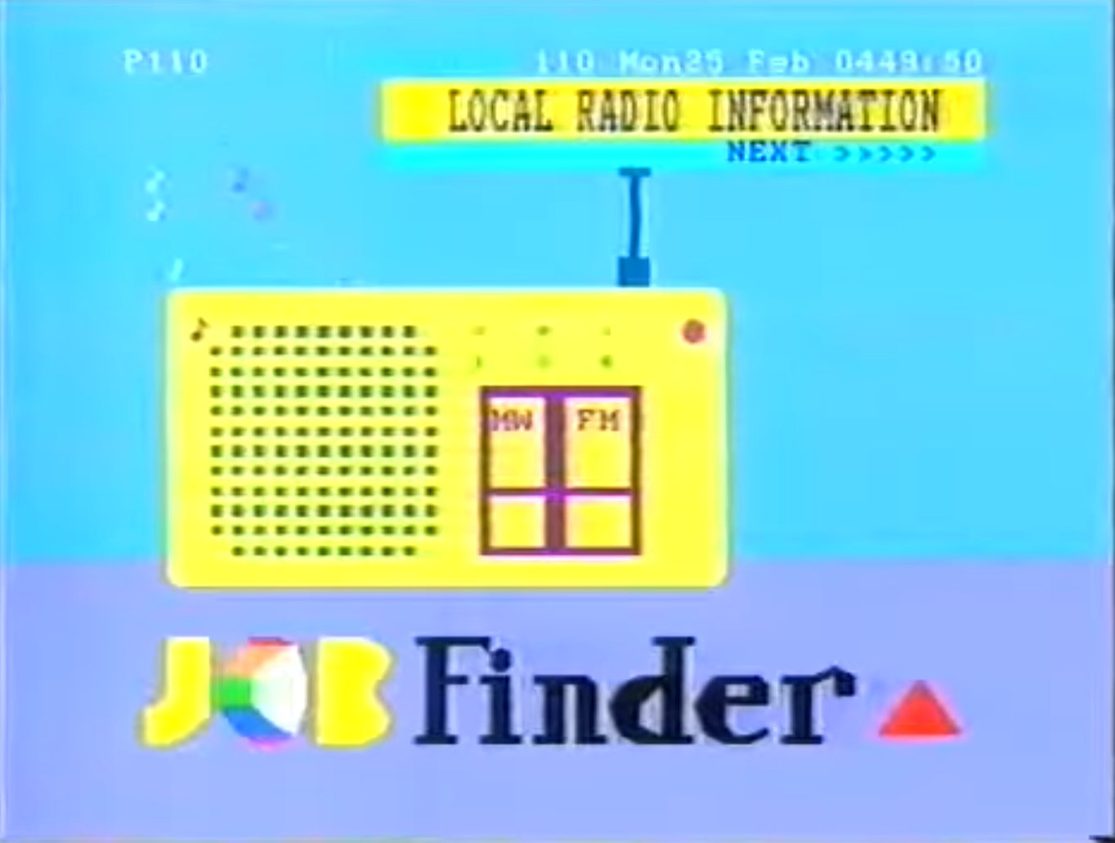
Central Job Finder utilised Level 2 to upgrade their teletext page layouts and icons from 1987. This made extensive use of the high definition shapes, boasting a multi-coloured cityscape including a building embellished with a jagged roof and spire. The Job Finder logo also received a makeover, with the letter O containing the Central rainbow and set against an orange background.
Later programmes employed advanced blink functions, such as in an artwork of a radio emitting music notes that flashed alternately. The Central Job Finder Level 2 broadcasts continued until 1994, at which point a new, non-teletext display system started to be used.
Pages From Ceefax
The Pages From Ceefax Level 2 broadcasts began in March 1994, showcasing exotic colour shades and graphic enhancements. In the second-ever Level 2 broadcast, a map of the UK incorporated dark green shading details, while a portrait of the Houses of Parliament added shades of brown with a purple gradiented background.
An artwork of a satellite showed off higher resolution polygonal shapes with a noticeably rounder Earth. The BBC’s Level 2 tests lasted two years, running until March 1996, when they were abandoned due to technical issues.
When the teletext specification was republished in the late 1990s as the Enhanced Teletext Specification (ETSI), Levels 2 and 3 were consolidated into Level 2.5 (HiText). This was implemented by a few broadcasters in mainland Europe including ZDF, and manufacturers started to incorporate the new features into their television sets.
Sources
- Wednesday 13th January 1982 BBC2 – Ceefax – Landscapes of England, uploaded by Kaleidoscope’s Presentation Vault
- WFLD Channel 32 – Nite-Owl (Complete & Remastered, 8/25/1982), uploaded by The Museum of Classic Chicago Television (www.FuzzyMemories.TV), 28 May 2020
- Teletext People: Mort Smith Ceefax, Intelfax 4-Tel, 3 November 2022
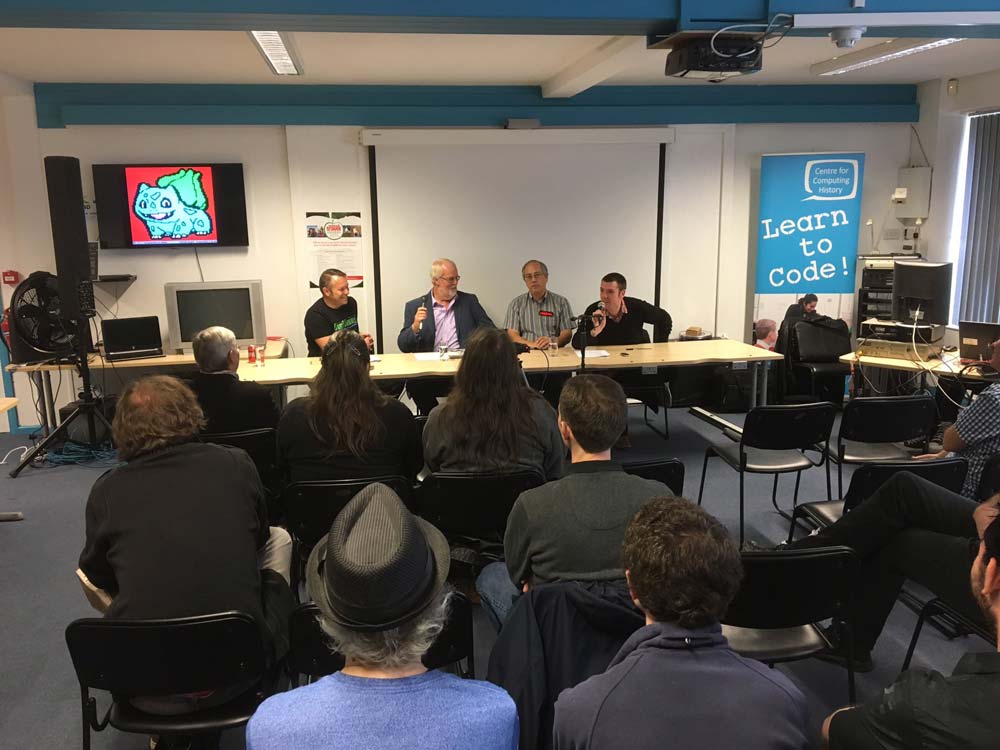
- Teletext 50 – Teletext Artists Panel with Paul Rose, Ian Irving, and Steve Horsley, uploaded by Jamie Nemeth, 27 March 2025
- Central TV Jobfinder (1991), uploaded by Kurt Shaw, 21 October 2017
- BBC1 Pages From Ceefax – Wed 2 Mar 1994 – Twilight Break, uploaded by Jez C, 8 August 2017
- Teletext People: Alistair Cree – ZXNET teletext editor, Byte High No Limit, 10 December 2022




Recent Comments