
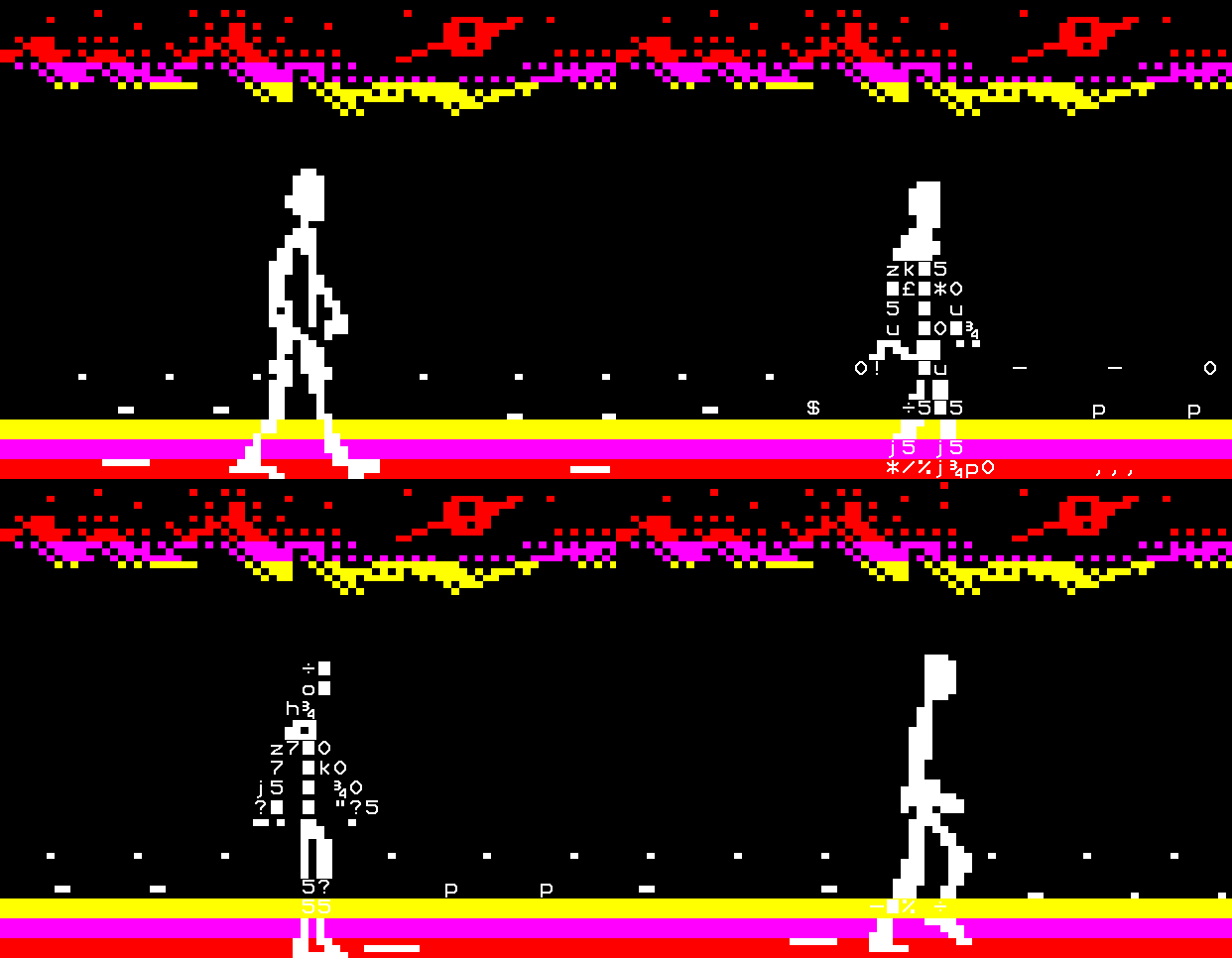


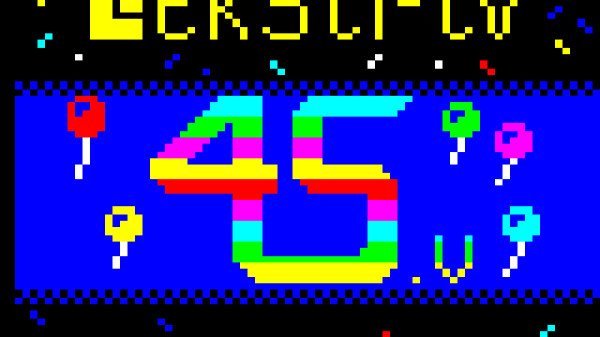
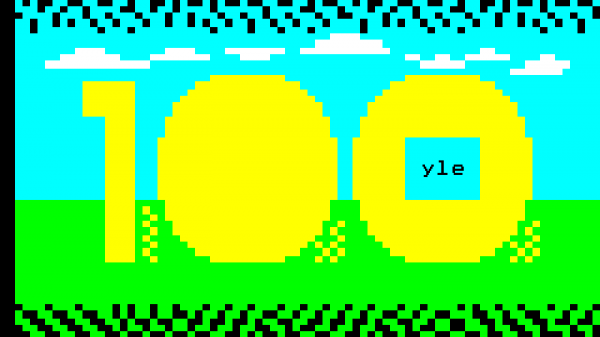
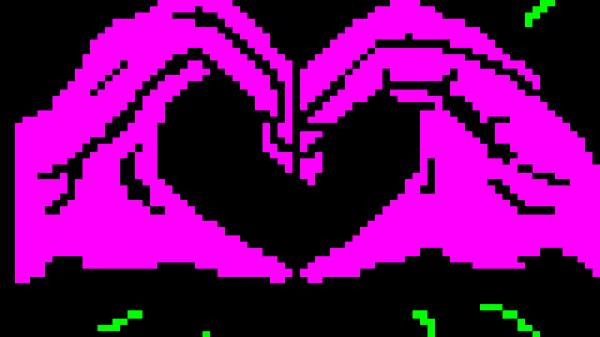
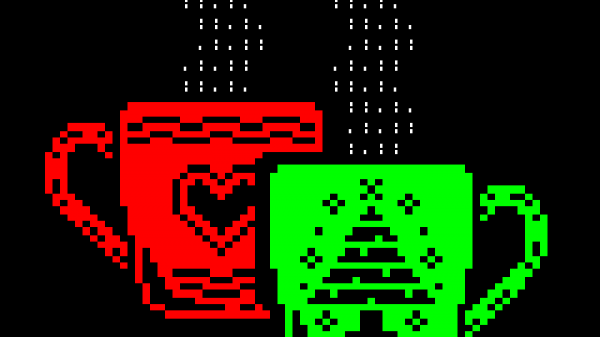
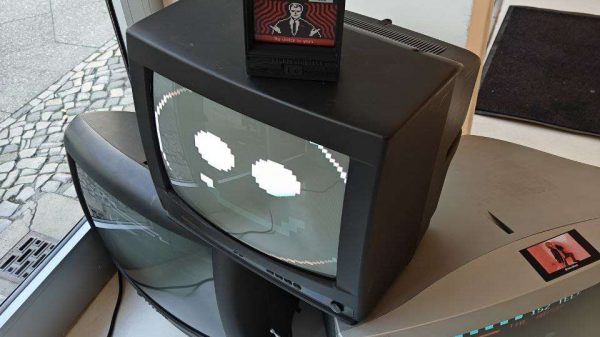
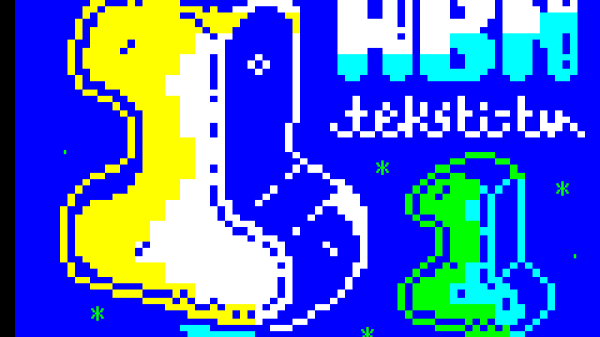
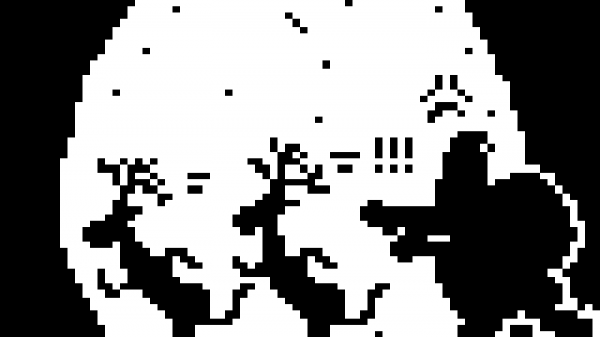
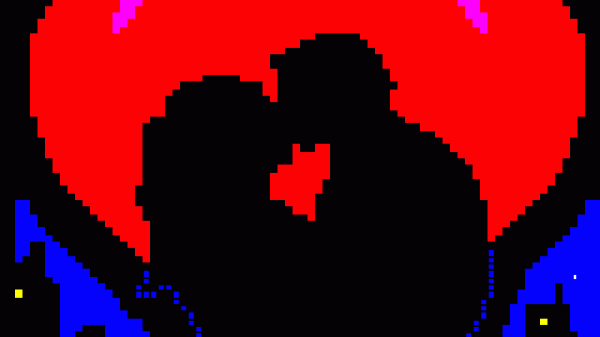
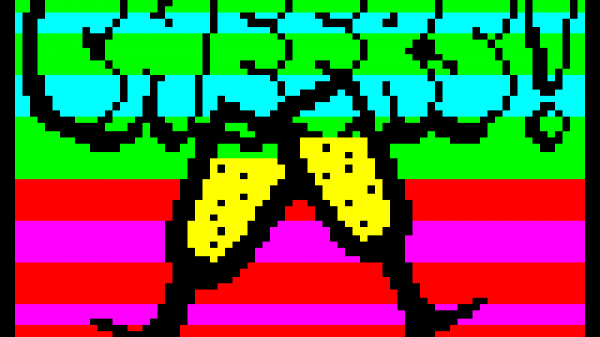
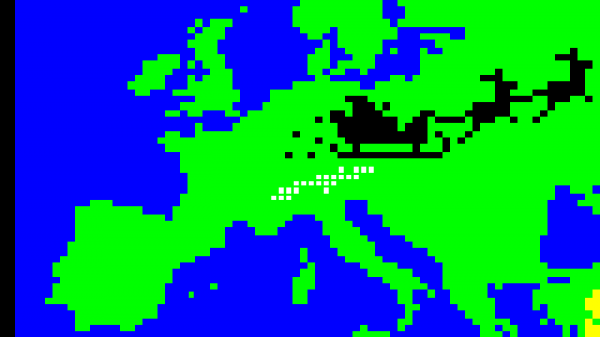
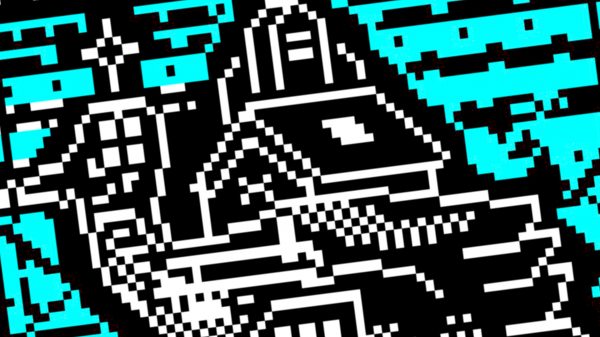
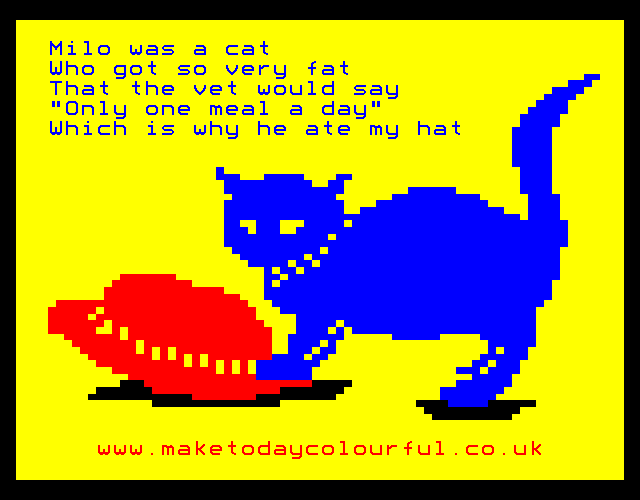
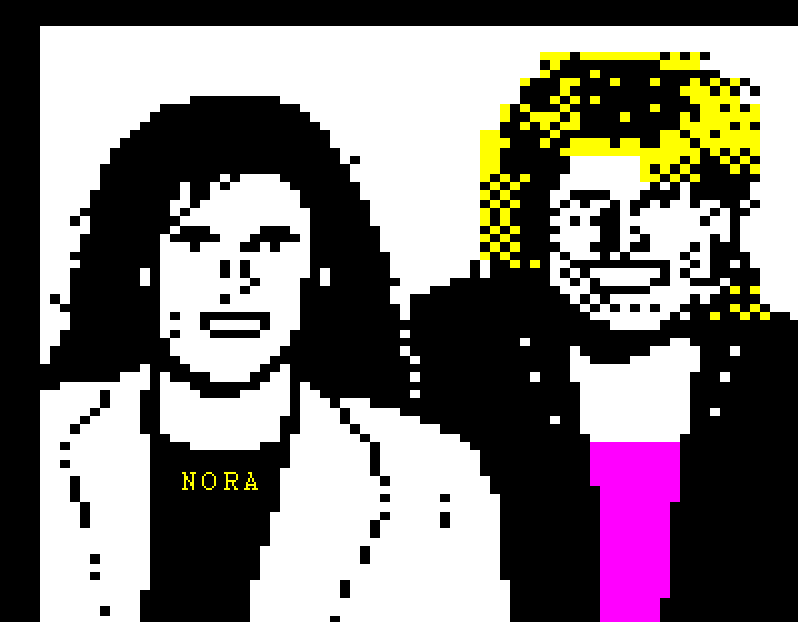
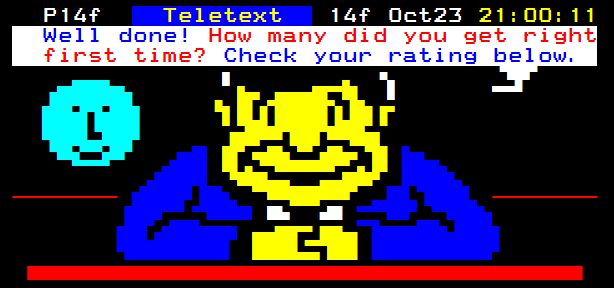

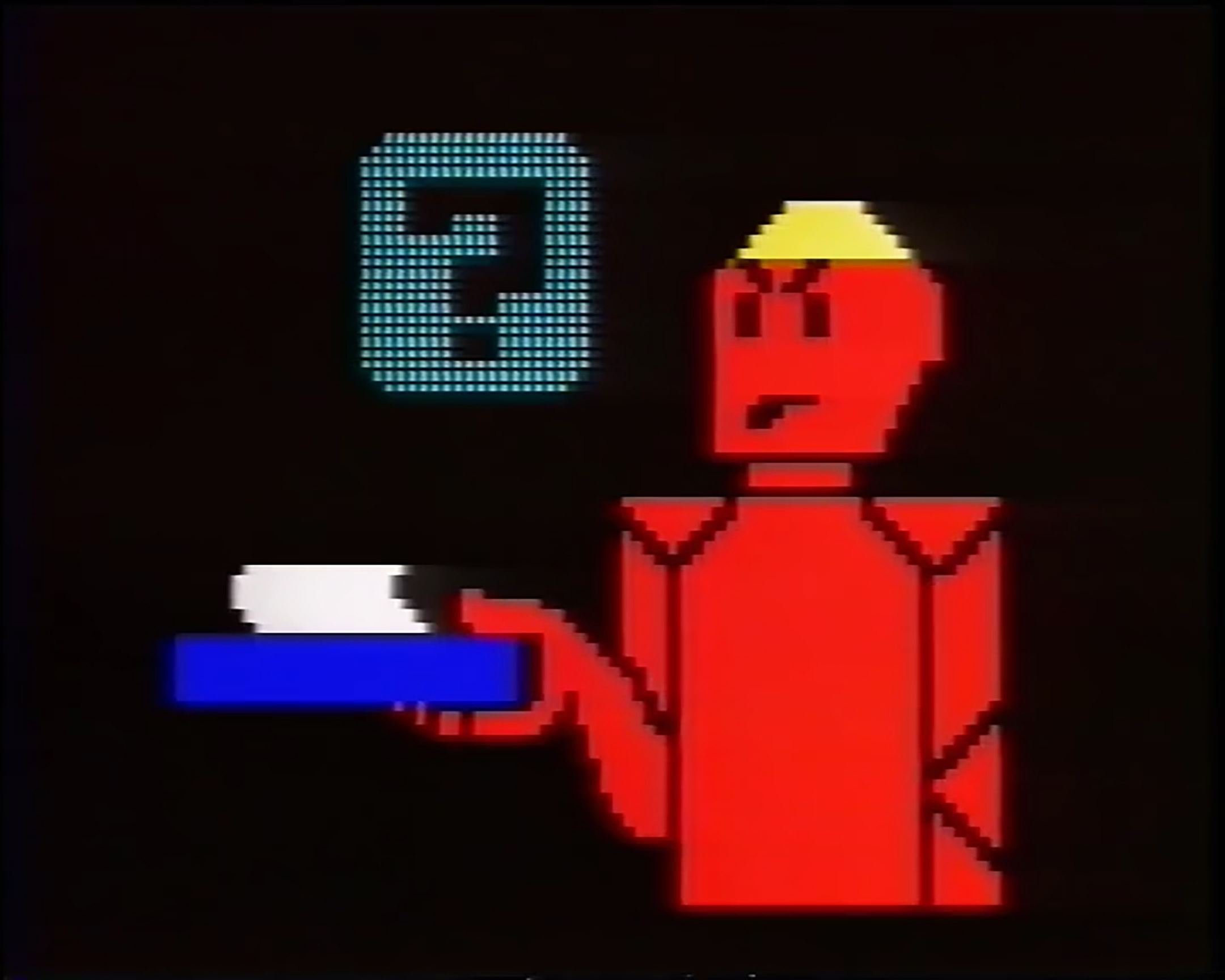
Broadcast in 1990, Hands Up! was a series of educational TV programmes commissioned by Channel 4 made entirely with animated teletext graphics.
It was the brainchild of disabilities producer Sue Crockford, who thought it might be a good way to introduce sign language to children. Along with Sue Harris, who taught BSL in a London school, they wrote a ten-episode story and commissioned Intelfax to make it. Harris had seen the 4-Telimations and thought teletext might be a cheap way to create a kids’ TV series.
The series took Ian Irving and his assistant Carol Childs more than a year to design and animate. On numerous occasions, sections had to be reanimated to be more accurate as it was “very difficult to illustrate hand movements in teletext, and they had to be right, otherwise kids could get the wrong idea.” Replicating the correct signs, hand shapes and movements, and working them into the storyline proved “a bit challenging”.
Irving “tried to enliven the actual hand signing with characters,” little “scene shifters” such as handymen who entered the screen and pushed things about, much like the ones seen on 4-Tel on View. The central robot and girl characters (the latter designed by Childs) visit the funfair and travel through ornate pixel art cities on their adventure.
Technical constraints
On one occasion, an episode that took about a week to create accidentally got wiped out when it was supposed to be saving to disk, meaning it all had to be remade. Thankfully, according to Irving, “it’s always quicker the second time round.”
The series was created with a RITE (Rolling In-vision Teletext Engine) Box, produced for in-vision teletext and first used in Ceefax AM, which was able to output teletext pages and insert them into the broadcast stream so the speed of the output could be changed.
For some of the animations in Hands Up!, even this wasn’t fast enough, so they were sent to a facilities house to be sped up. Each episode had to fit into a roughly five minute time slot.
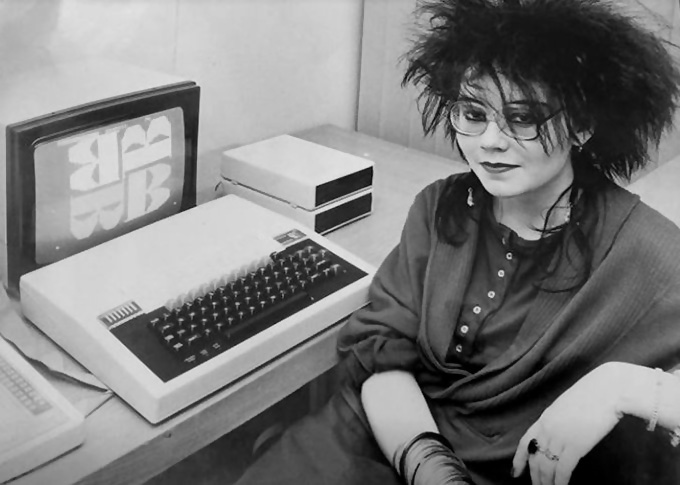
Irving also experimented with writing software for his BBC Master, using it to automate the creation of certain animated sequences
“It was probably a bit clunky in terms of actual television, and the story was a bit odd, but it was certainly very unique at the time. I don’t think anything like it has been done since.”
–Ian Irving
The series received mixed feedback from the deaf community. According to Irving, Sue Harris said that “kids loved it”, but some sign language teachers were “not impressed” by it.
Sources
- Hands Up! Episode 1, uploaded by Richard Shaw-Wright, 21 January 2008
- Teletext Sofa Club: Ian Irving Interview, 15th April 2021
- Teletext People: Ian Irving, Byte High No Limit, uploaded 19 November 2022


Recent Comments