
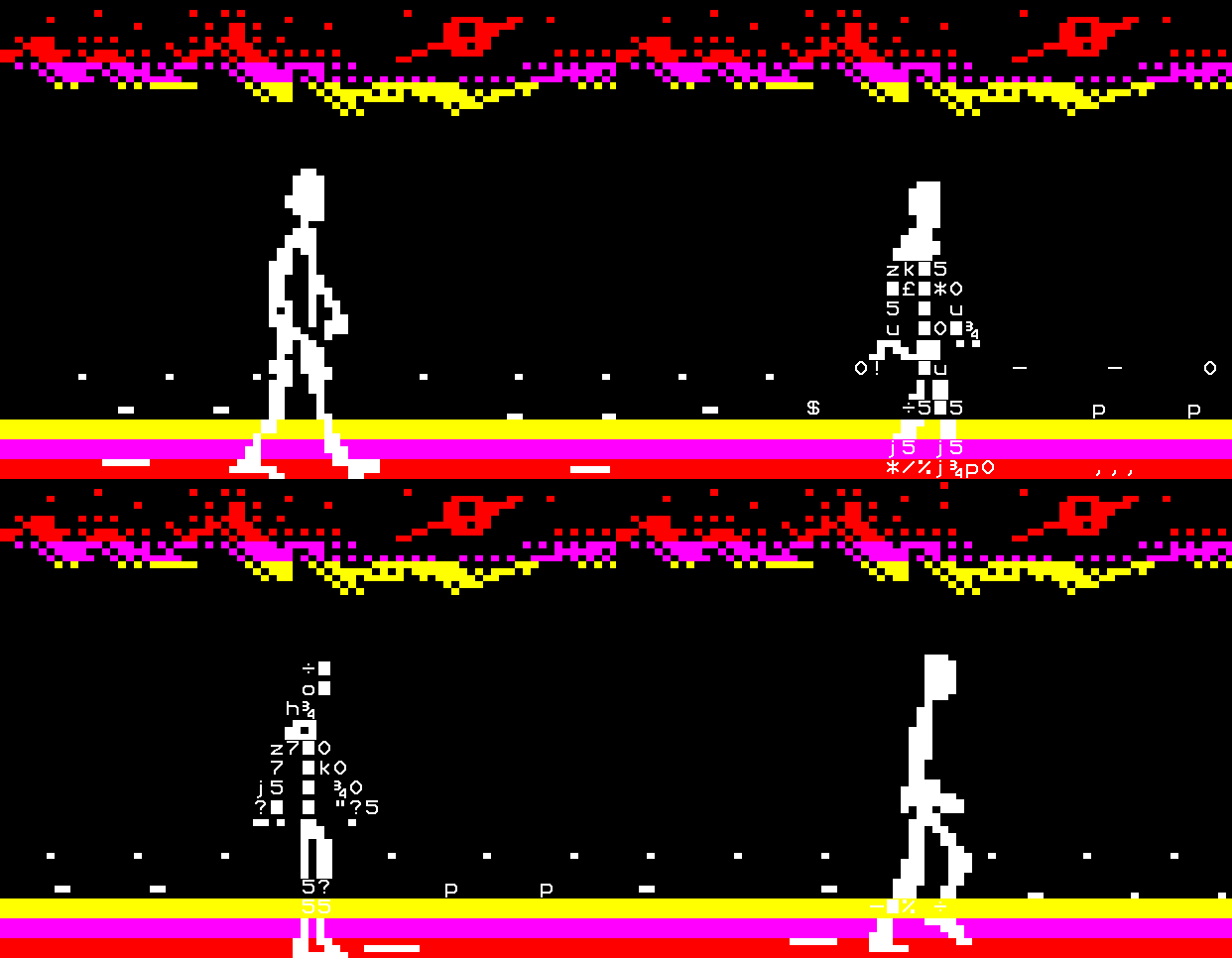


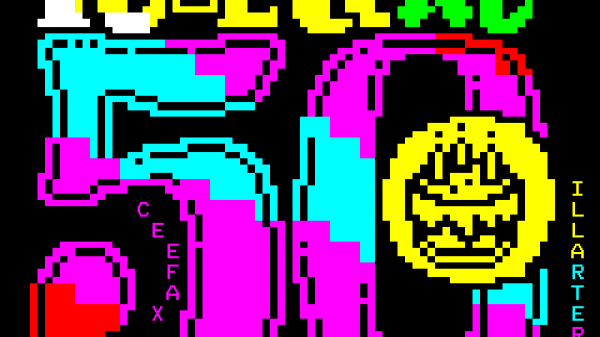
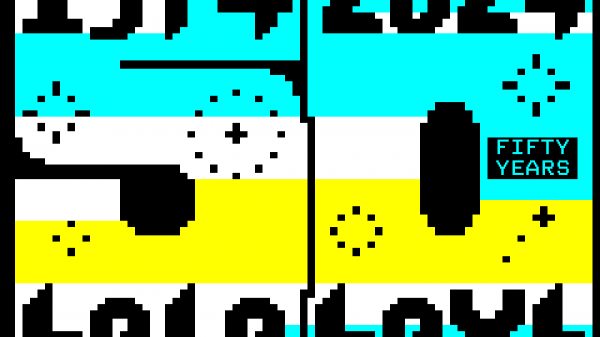
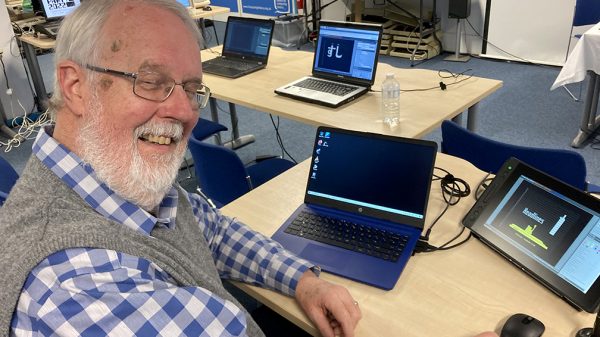
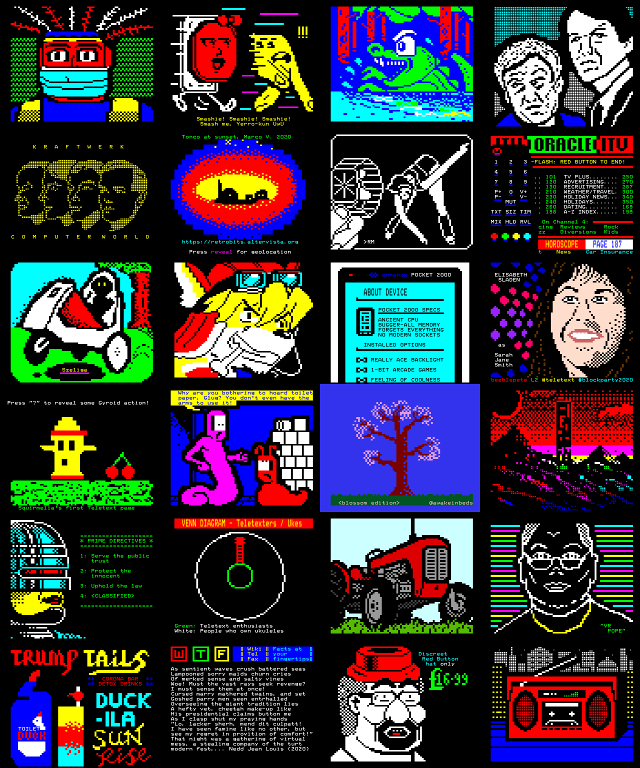
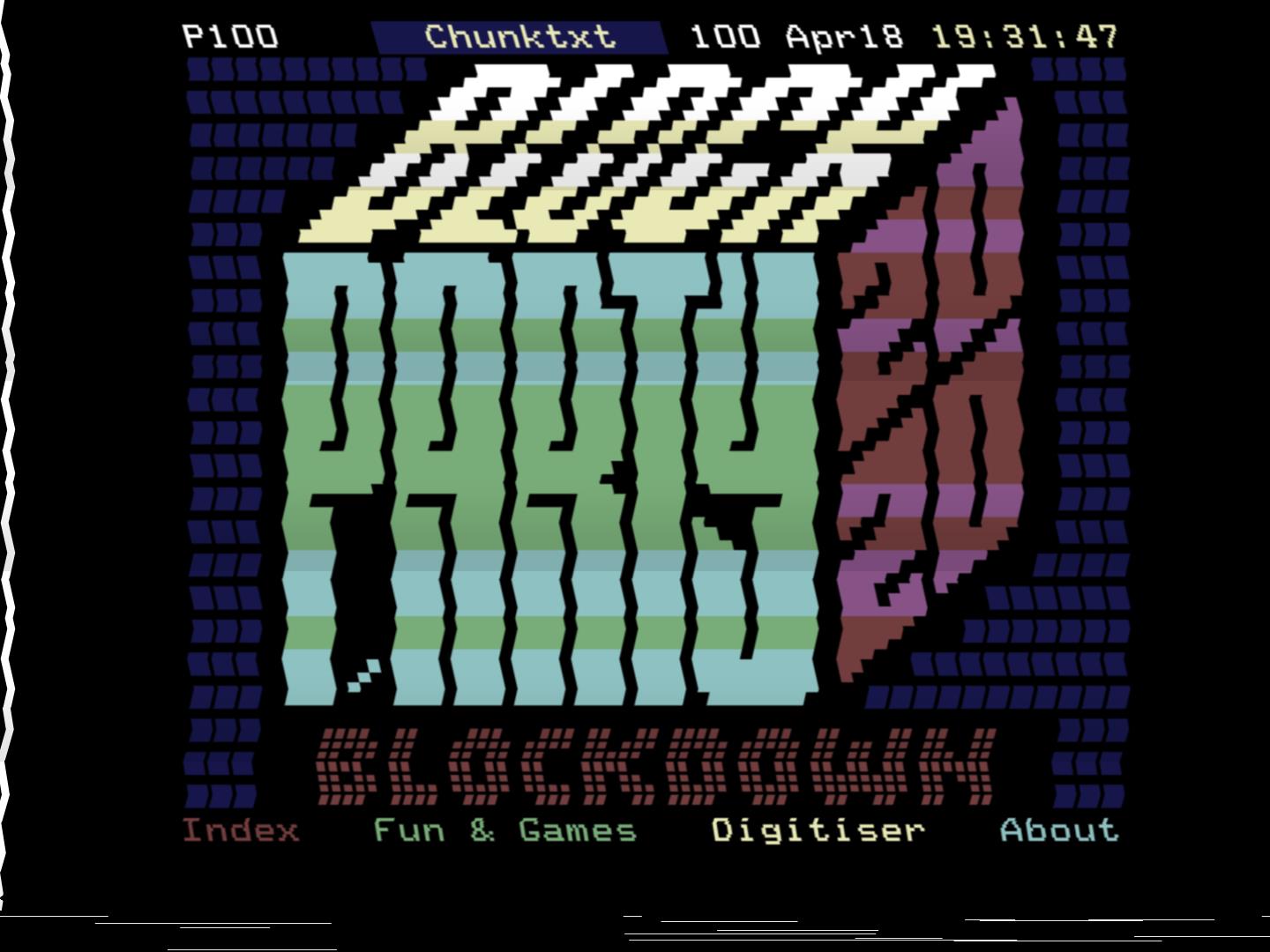
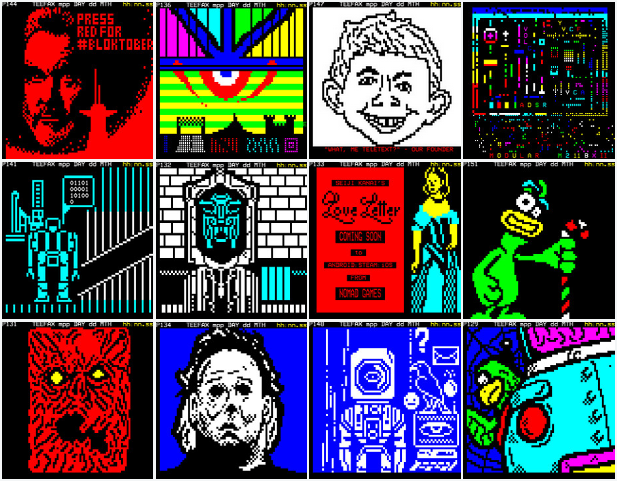
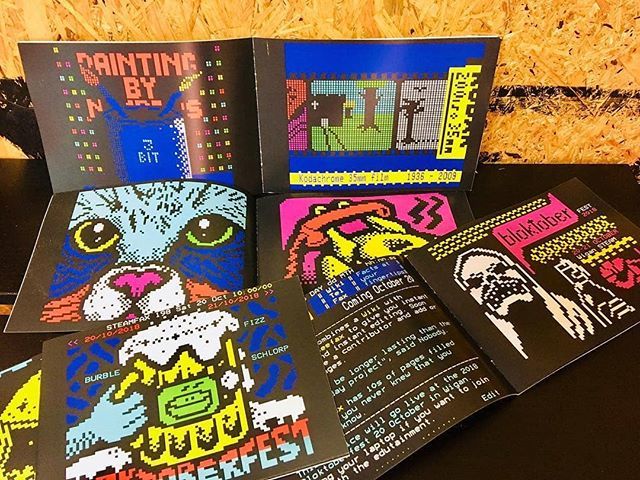
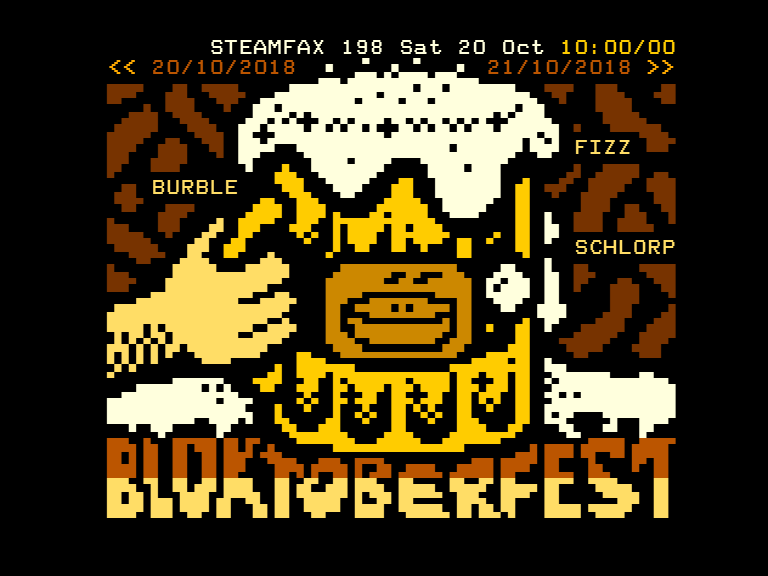
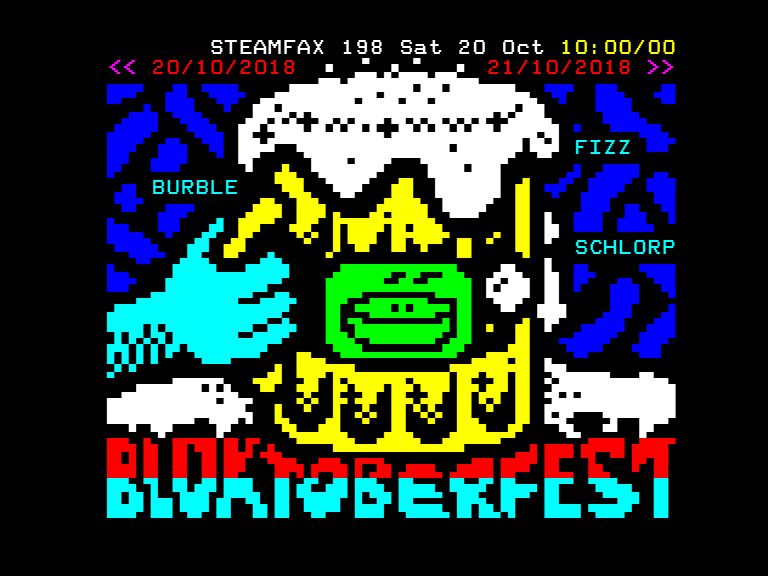
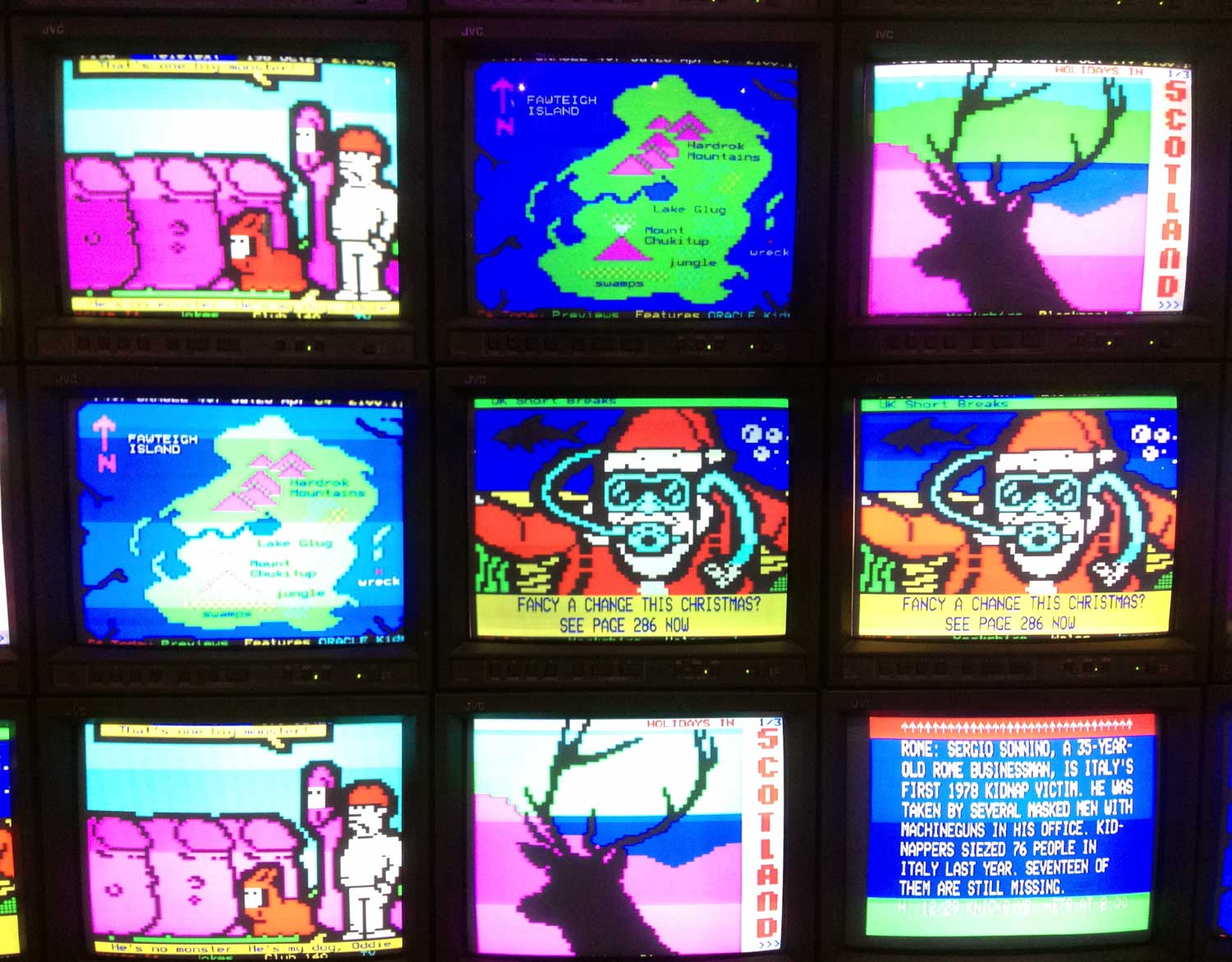
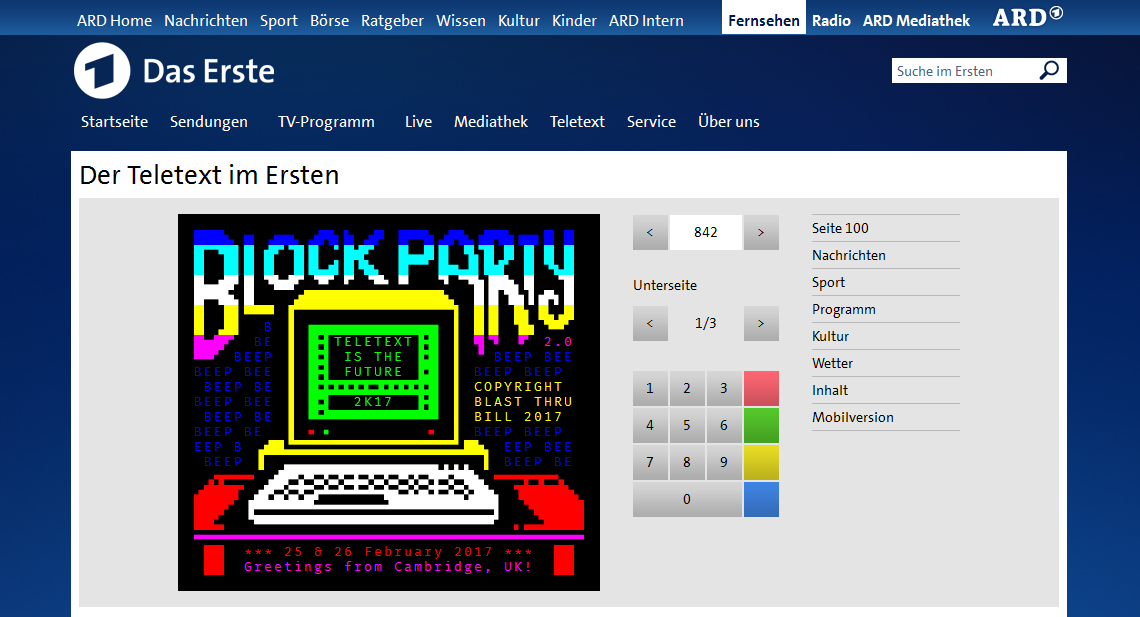
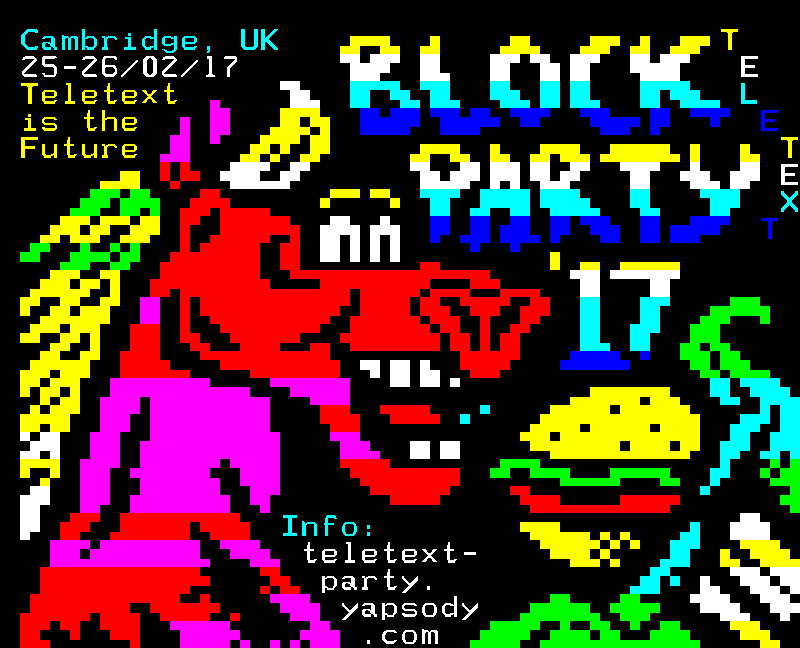
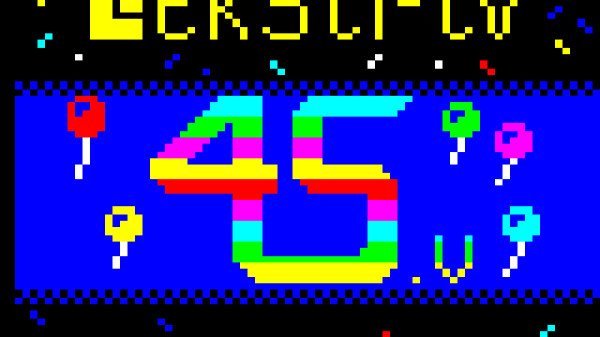
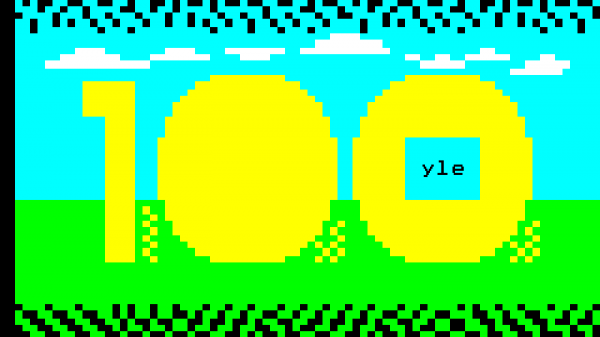

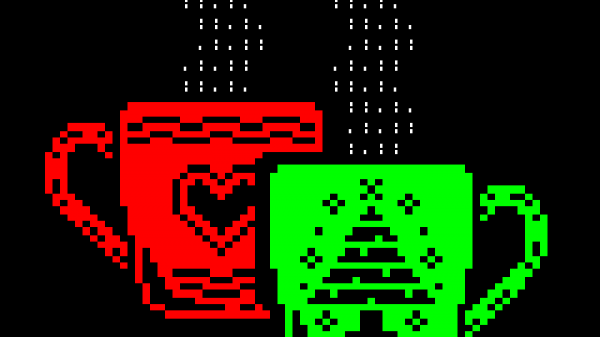
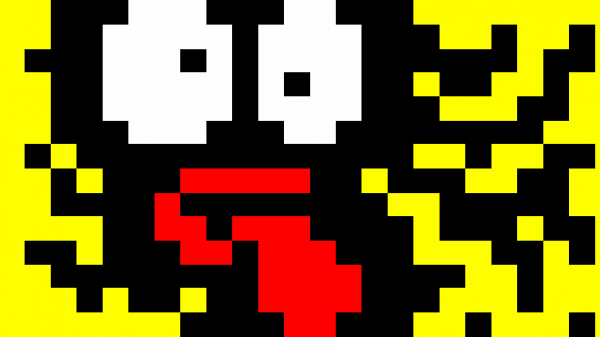
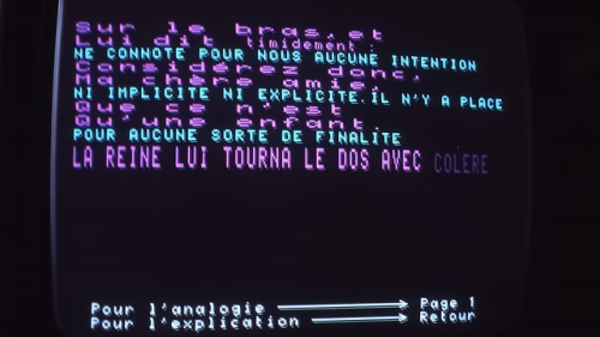
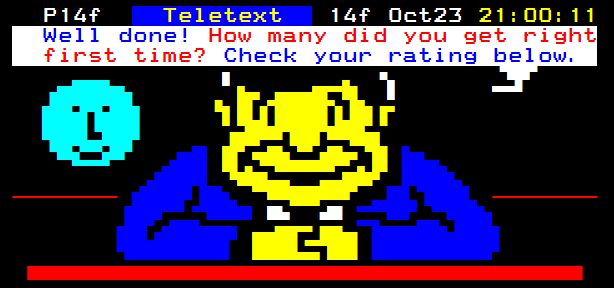
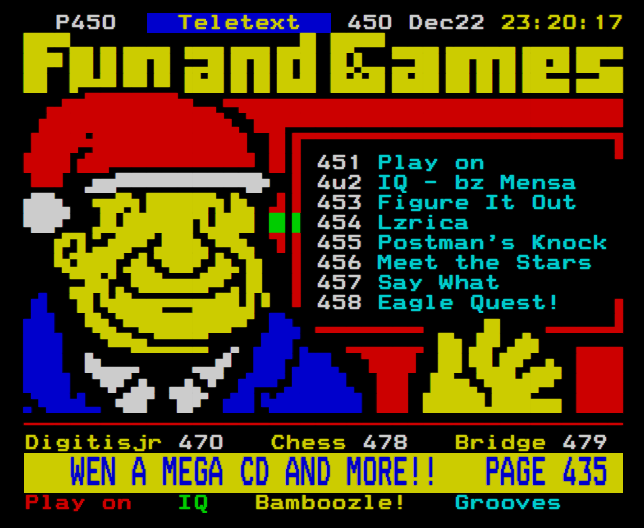
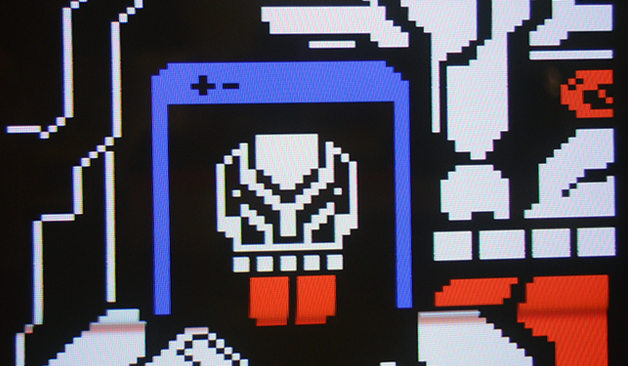
Many artists, academics and commentators have contextualised teletext art in their own way, addressing commonly-cited criticisms regarding the medium’s later life.
Raquel Meyers, in her 2016 chapter for Teletext in Europe: From the Analog to the Digital Era, questioned, “is it just for text?” Far from “dead media”, Meyers characterised teletext art as an unexplored medium that could be revived through artistic experimentation and hobbyist communities thanks to recent developments like the open source edit.tf editor. She highlighted numerous artworks since the year 2000 that demonstrated how teletext could be used for storytelling, live performances, installations and experimental visuals.
In a 2020 interview, Yle Text’s Matti Rämö admitted that teletext is mainly informational, but teletext graphics can add “something extra, which of course needs its space, and it’s a nice thing to have.” However, he added that the bones, the “strength of teletext is the text” and its “compact form of passing information.” Like Meyers, he made the point that such a resource is necessary in the Internet age to find the “essential news” to “filter the reality around us.”
Ian Irving, pondering the same issue 2021, echoed the fact teletext is “primarily information”, but “the way it’s presented is very important.” He saw professional graphics as contributing to the credibility of teletext as a medium, for “both news and information and advertising.”
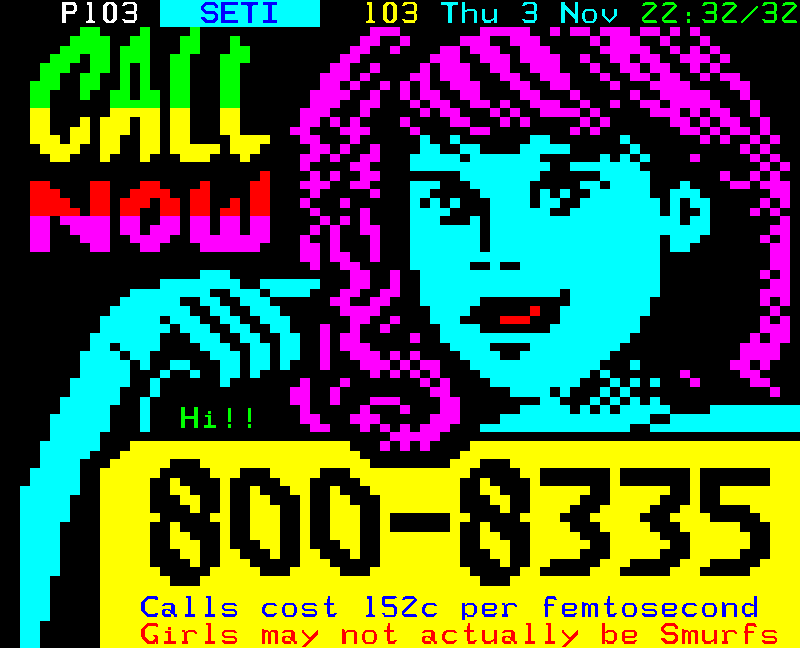
Writing in 2018, Dan Farrimond argued that, through commercialism, teletext had undergone a form of “industrial revolution” best exhibited in the sex chatline artwork that still adorned European teletext – perhaps the most intricate designs on certain services.
However, the “artisan” teletext art movement was pushing back against this, thanks to the willingness of services such as ARD Text and Yle Text to showcase artworks that explored more political, philosophical and creative themes. Finally, like Meyers, he added that teletext’s full potential had yet to be realised.
Media Archaeologist Erkki Huhtamo writes that teletext’s limitations do not restrict the range of subjects and styles it can produce, and this “richness of possibilities” stems from “stretching the contents of a limited toolkit”. He goes on to say that “the medium will develop a cultural memory for itself,” including “reflections on its formal qualities and coding principles,” and that has already occurred to a certain extent with previous International Teletext Art Festivals.
We need new forms and ideas, from the past as well as from the future, to stir the minds and to break the spell of uniformity. Teletext art can be like a fresh breath from the unknown. I cannot see it ever gaining mainstream acceptance, but being at the fringe is not necessarily a bad thing because it gives room to breathe and to think about new strategies and approaches.
–Erkki Huhtamo
In 2014, FixC’s International Teletext Art Festival organiser and curator Juha van Ingen heralded the challenge of converting art to teletext, which artists have to do “the teletext way,” and that “almost anything you do in teletext looks good.” However, he lamented that it was “almost impossible” to get teletext art broadcasted.
Speaking about teletext’s graphic identity, Van Ingen suggested the enthusiasm for the medium could be “explained by the aesthetic itself.” Even when used in advertising, he said, “the medium itself is also meaningful. The meaning is lost if you only adopt the graphic. What’s interesting about teletext is that you see what you have.”
Sources
- Teletext in Europe – From the Analog to the Digital Era, Hallvard Moe and Hilde Van den Bulck, ISBN-13: 978-1785310065, retrieved 9 February 2026
- Teletext R Podcast, 29 February 2020 – Matti Rämö: Teletext Is Not Fin(n)ished, teletextart.co.uk
- Interview with Ian Irving, teletextart.co.uk, 8 February 2023
- Teletext art for teletext art’s sake?, teletextart.co.uk, 5 February 2018.
- Teletext Art Between Past and Future, teletextart.com, Erkki Huhtamo, accessed 6 March 2026
- A festival devoted to Teletext art is set to open in Berlin, Dazed Digital, 8 July 2014




Recent Comments