
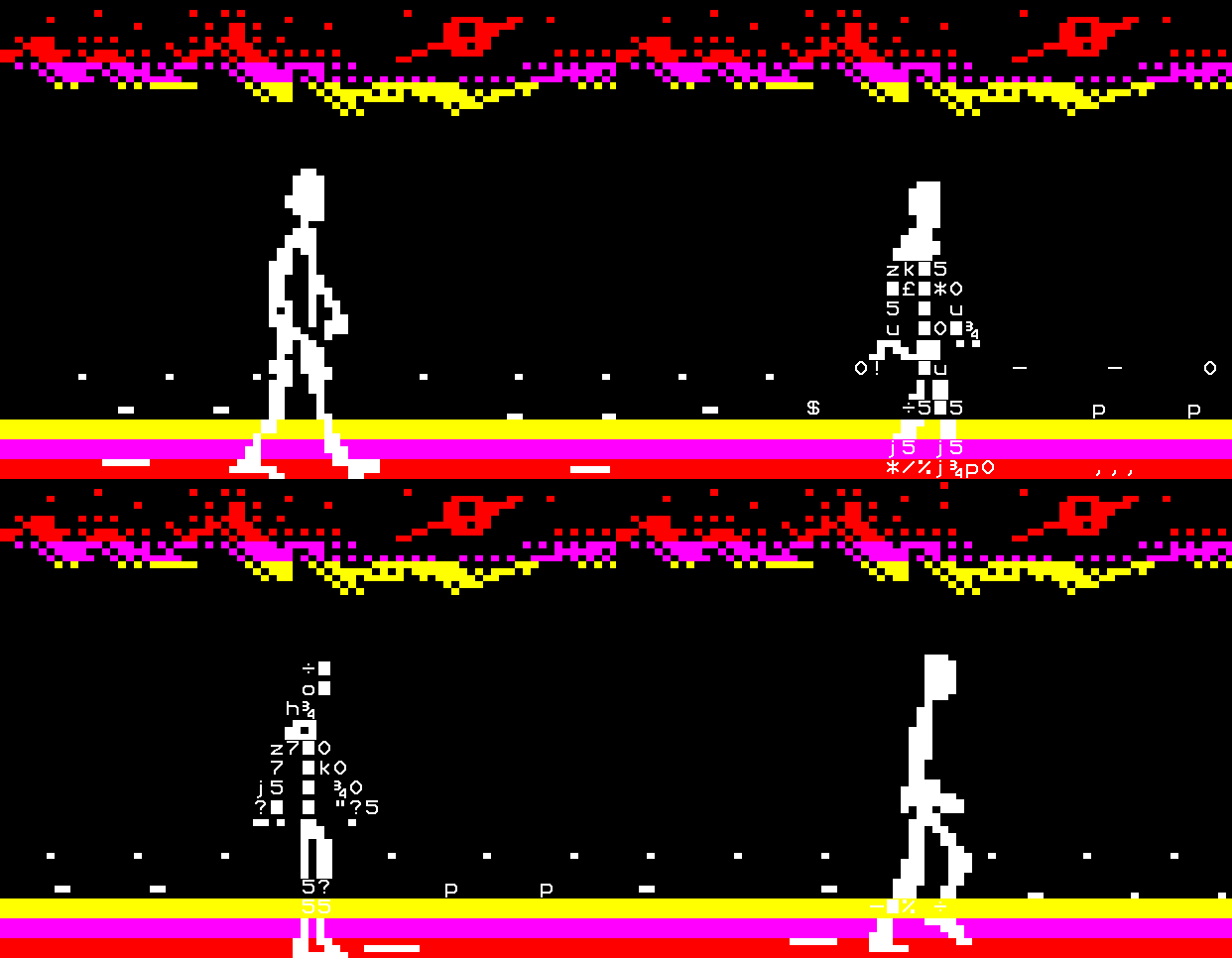


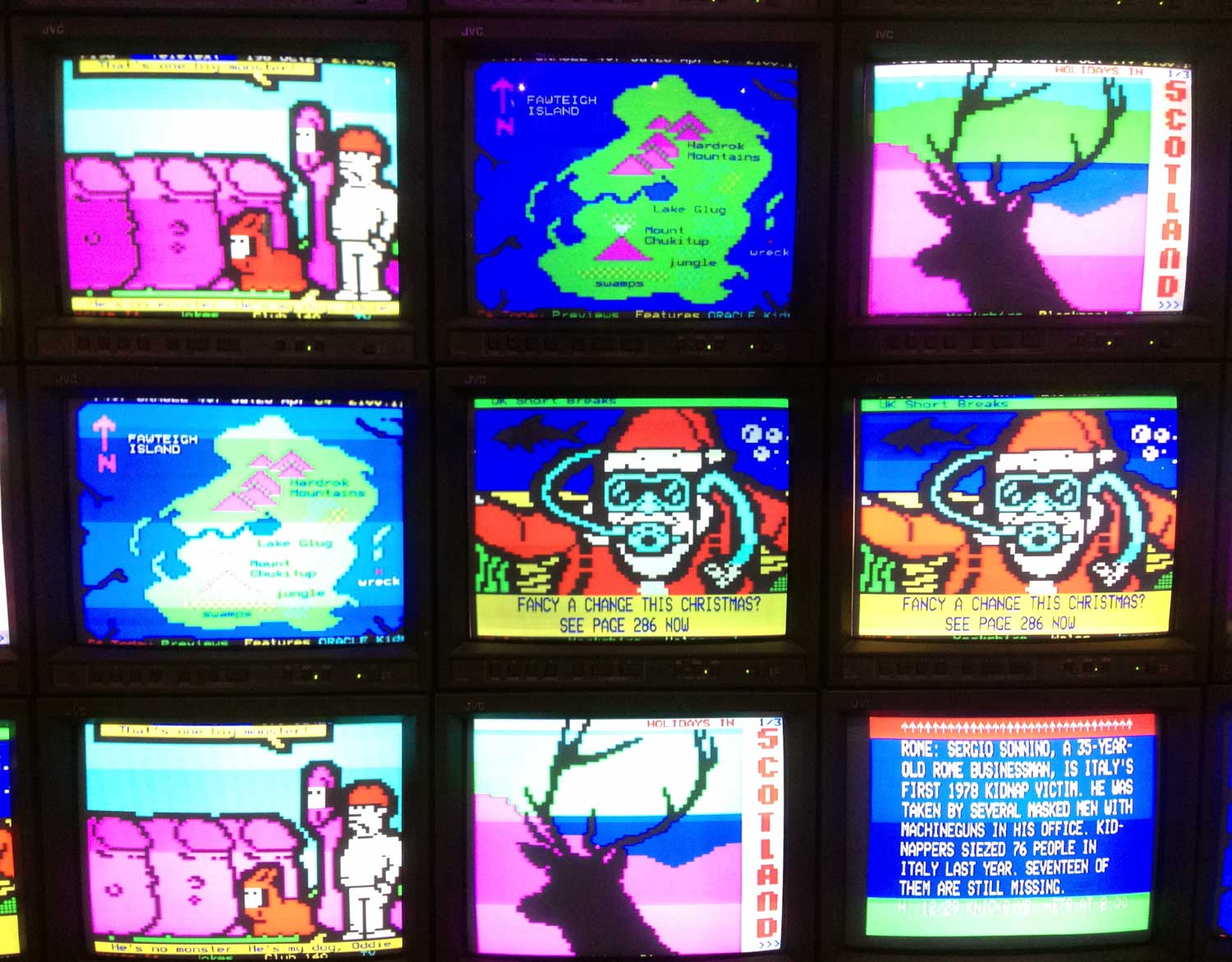
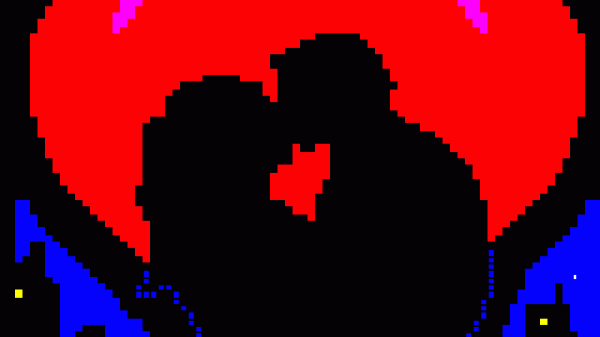
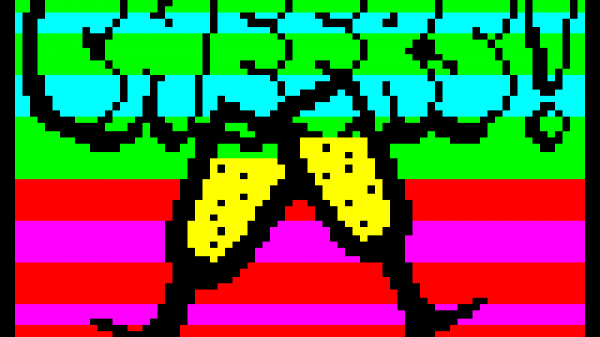
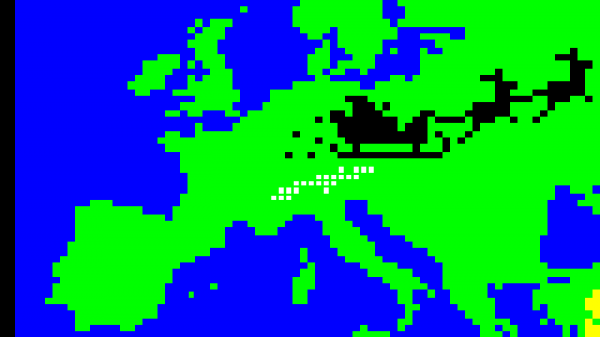
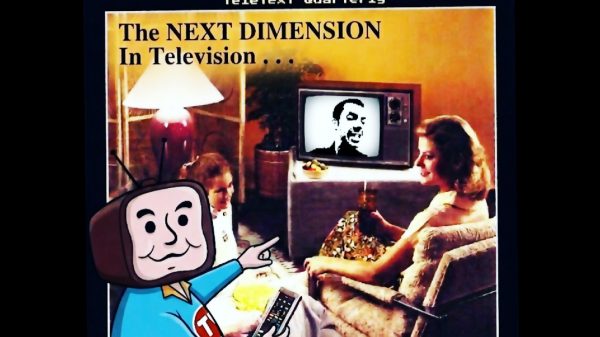
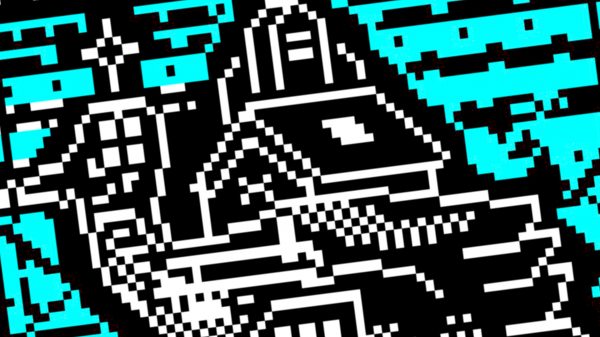
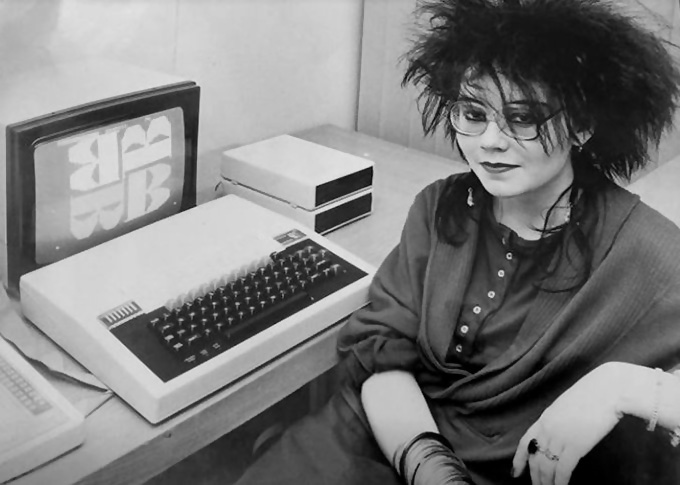
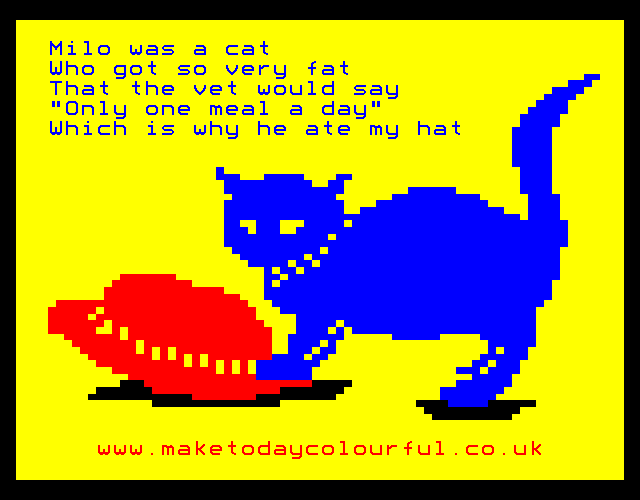
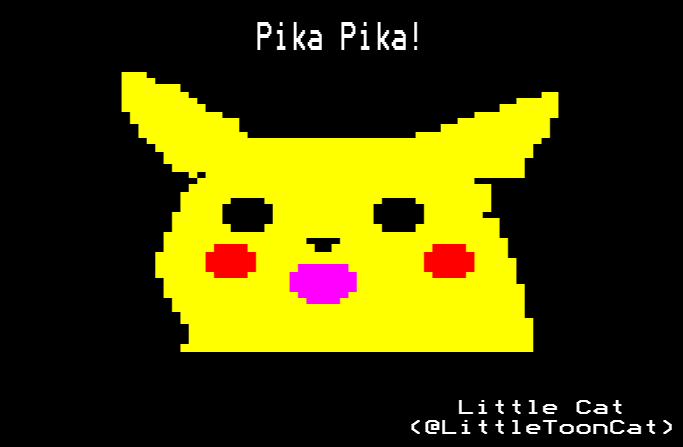
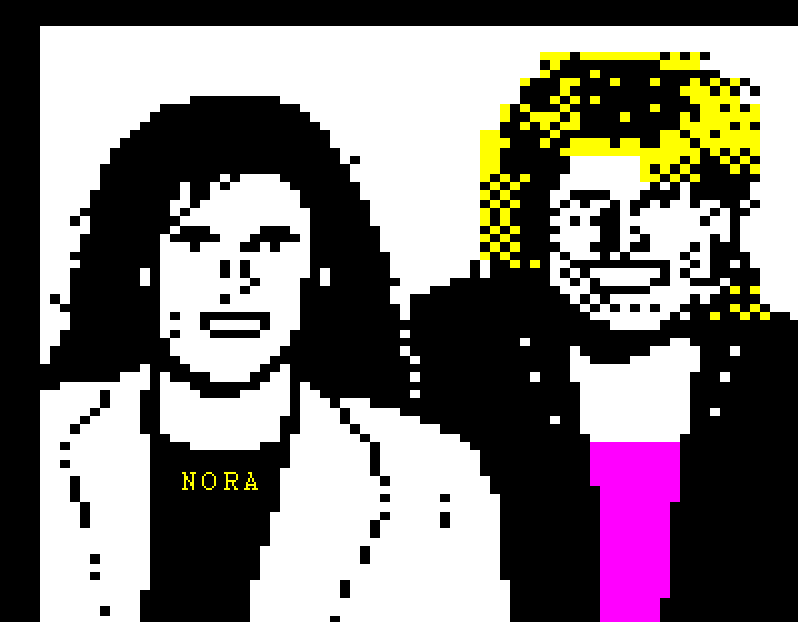
With the 1981 launch of the BBC Micro computer providing a new and convenient method of coding and updating teletext pages, administration of the medium became a much quicker process. This had a knock-on effect on teletext graphics, which were becoming increasingly common.
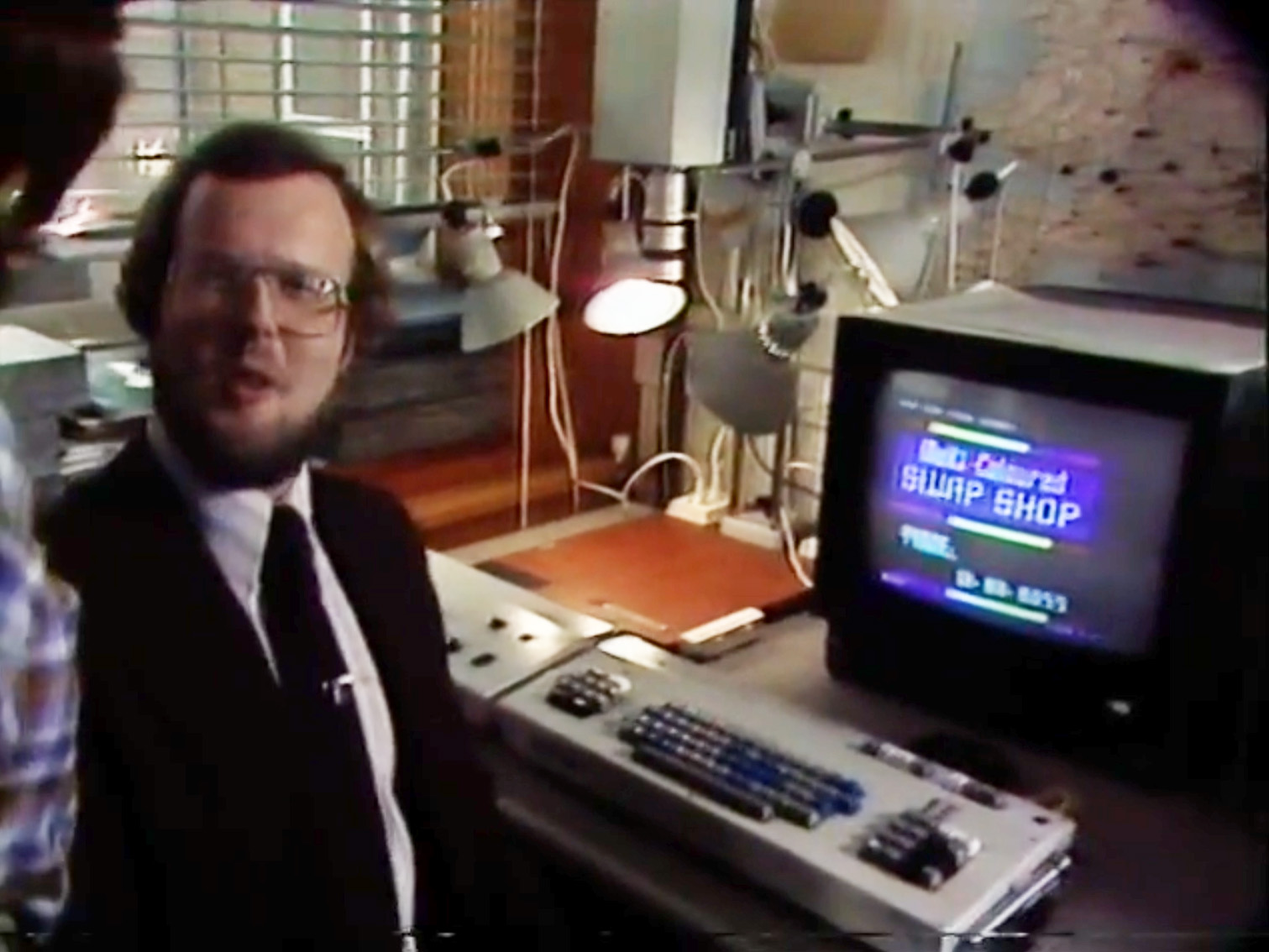
By this time, Ceefax had established a dedicated graphics editing workstation connected to a digitiser. Photos could be placed under a camera, which would convert the image to teletext format. The resultant adaptation could then be cleaned up or overworked with keyboard controls to achieve a more accurate rendition of the original picture.
These capabilities were exhibited in a February 1980 edition of Swap Shop, with a digitised version of presenter Noel Edmonds appearing at the end of a feature about Ceefax.
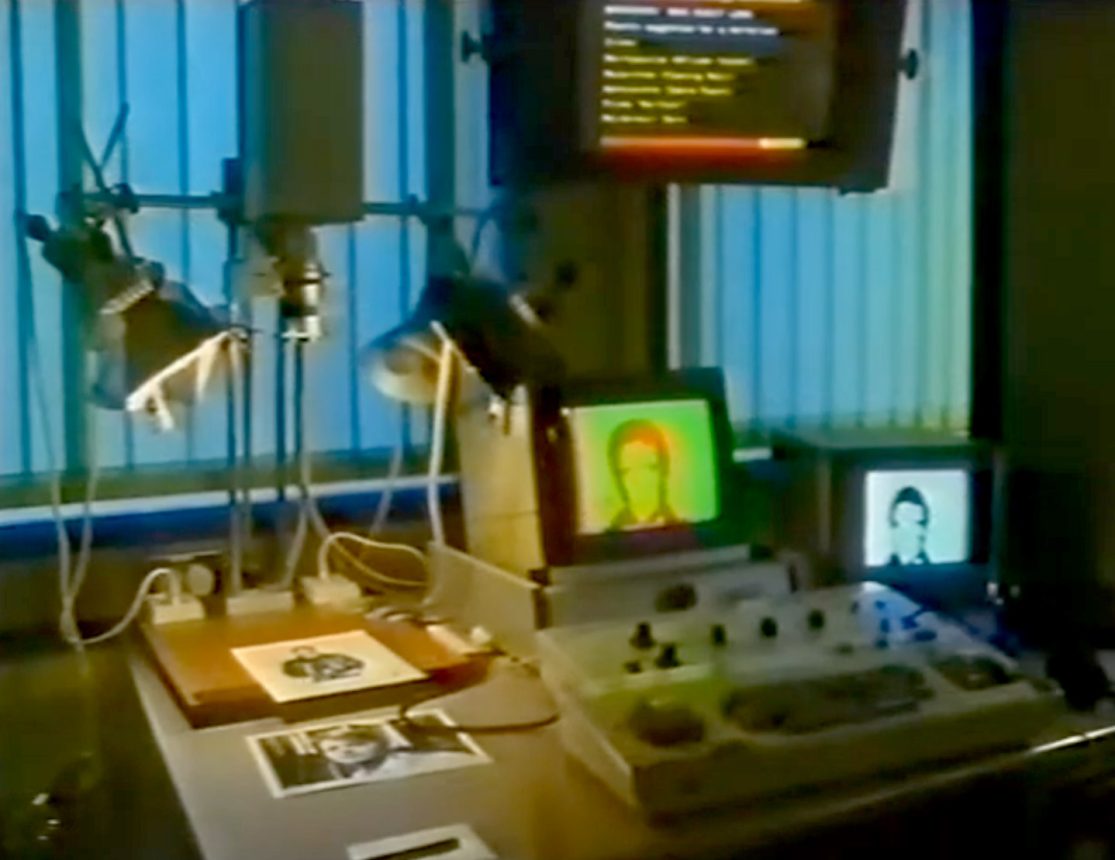
The teletext system was originally designed for just that – the transmission of text. The block graphics of Tom Jones are achieved by processing the video signal from the camera pointing at the photograph. At the start, fine graphics weren’t considered important for a text service. The alternative is to create the graphics at the keyboard, manually, and this actually produces much more interesting displays.
–Open University TV and Teletext
In a 1980 news clip of Queen Elizabeth II and Prince Philip visiting ITN Studios, an employee is shown reviewing digitised teletext images of the two. This digitisation is described by their ORACLE tour guide as a “photographic process” that is “corrected to a certain extent by the operator”.
Not all artists were fond of the digitiser, however. Ian Irving recalls that the one they had at Ceefax “was very limited because of the inaccuracies,” and that “it was almost always quicker to do it with the keyboard.”
Steve Horsley, Graphic Designer at Teletext Ltd in the 1990s, said that their digitiser “hardly ever got used.” Since it only produced a highly impressionistic black and white image, the colours had to be put in afterwards, and the user “might as well have done it [themself] from the start. It probably cost them thousands of pounds but it was never used for anything as far as I know.”
Modern digitisation software
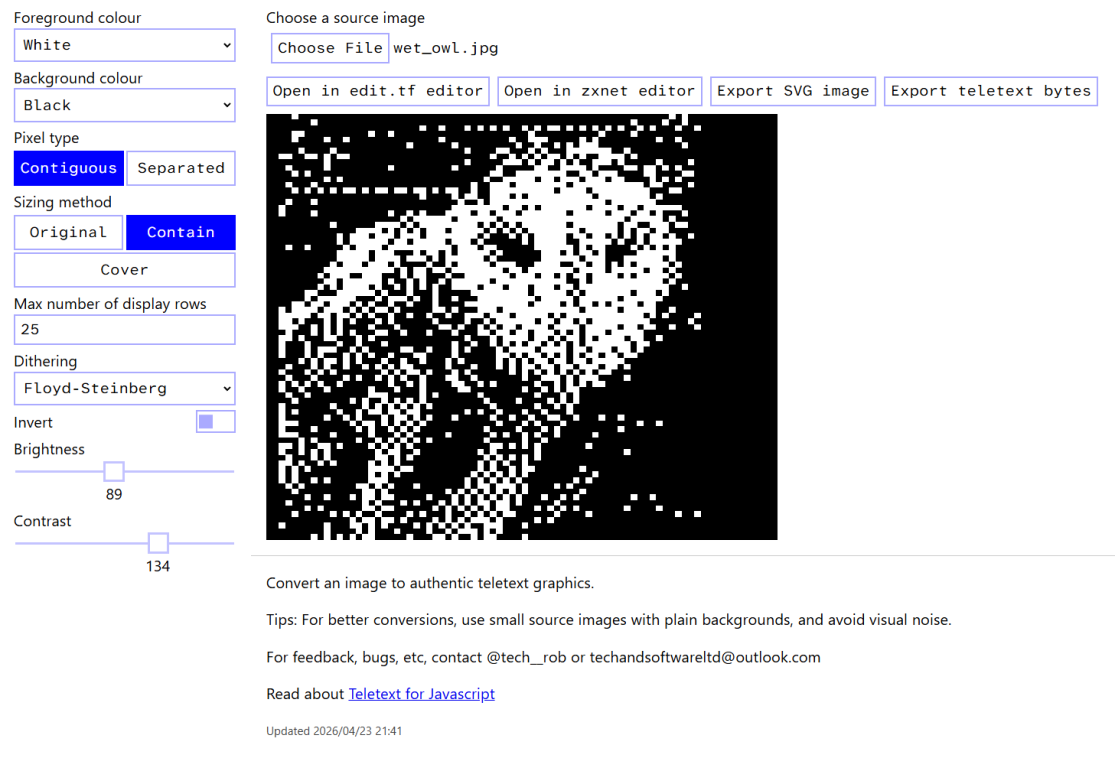
Many tools now exist to convert images to teletext, such as Image to Teletext by Tech Rob and Image2Teletext by KieranHJ. Additionally, editors such as Flair, Cebra Text and tt-edit offer image import options, though without the same level of customisation as those specialist tools.
Sources
- Ex BBC Engineer explains how Teletext works! #TechTalk Deep Dive, Broadcast Focus, 10th December 2024
- Teletext76: Teletext art from 1981
- Open University: Teletext
- Ceefax behind the scenes with Maggie Philbin, Swap Shop, BBC, 9th February 1980
- The Queen’s Festive Visit to ITN – Elizabeth II and Prince Philip Tour the Newsroom (1980), uploaded by ITN Archive 17 December 2024
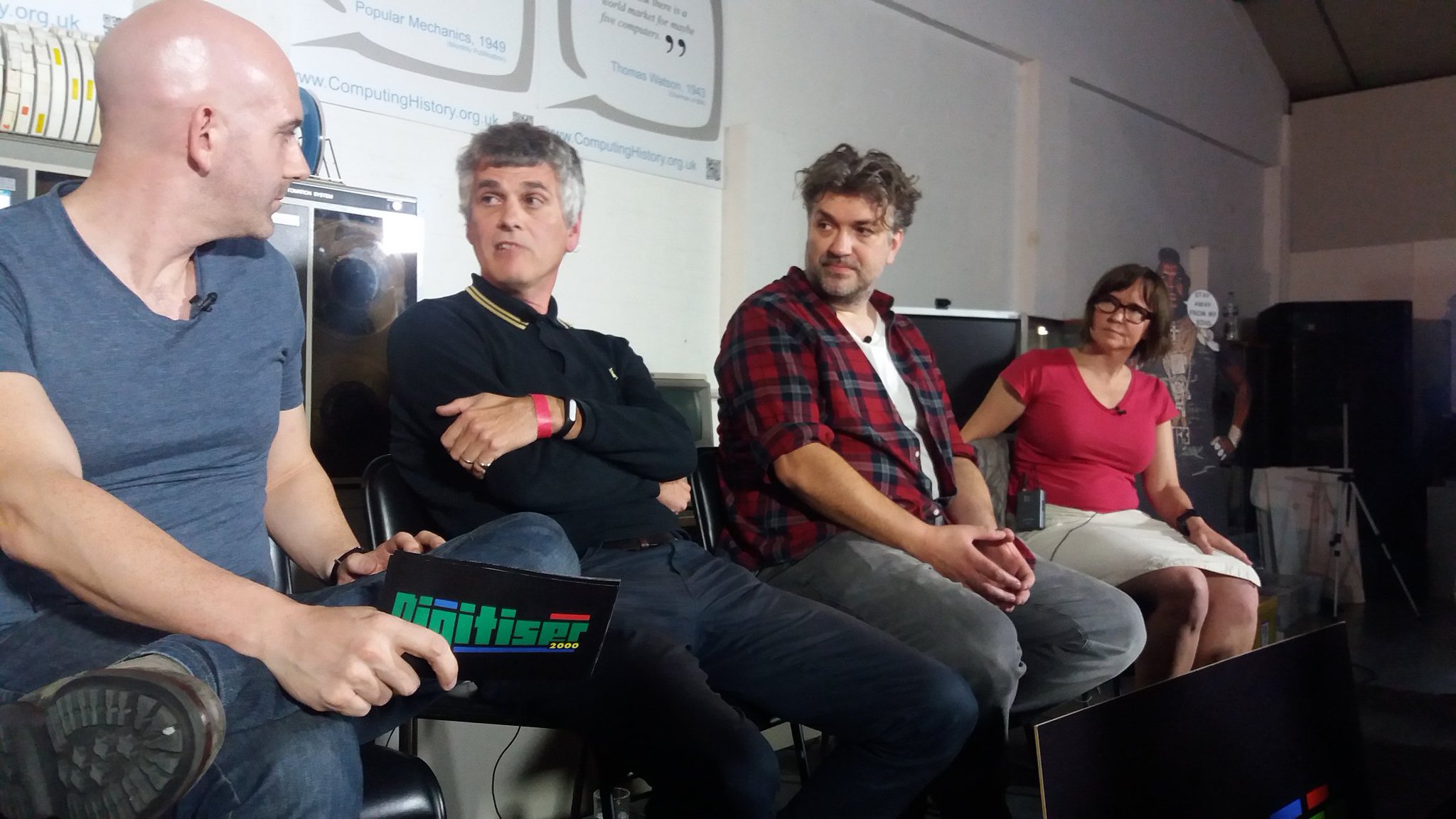
- Teletext 50 – Teletext Artists Panel with Paul Rose, Ian Irving, and Steve Horsley, uploaded by Jamie Nemeth, 27 March 2025



Recent Comments