


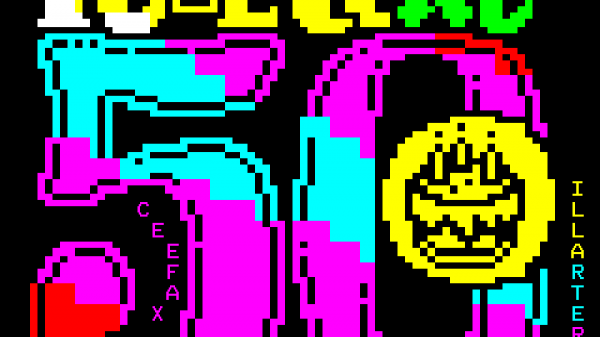
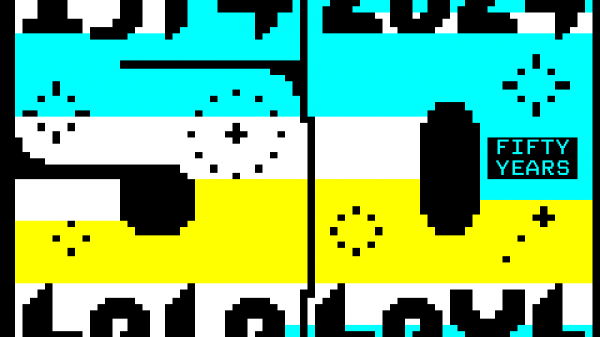
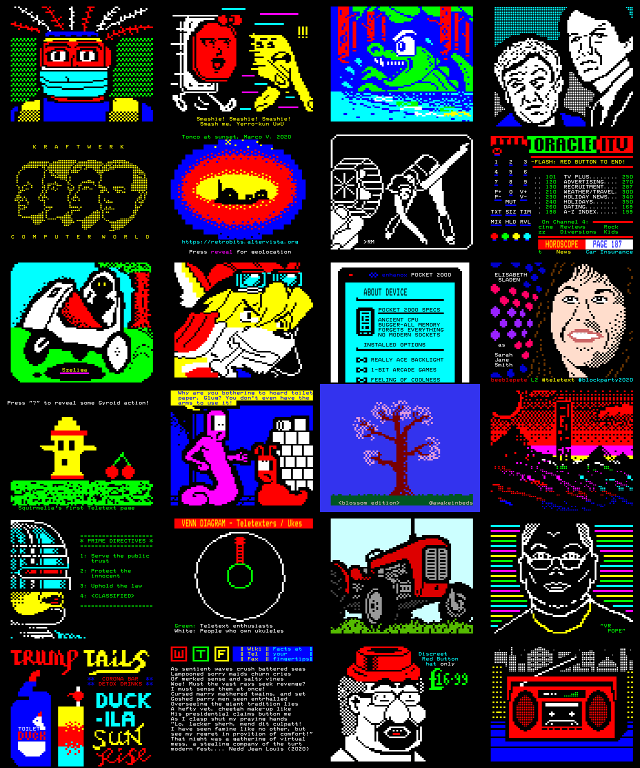
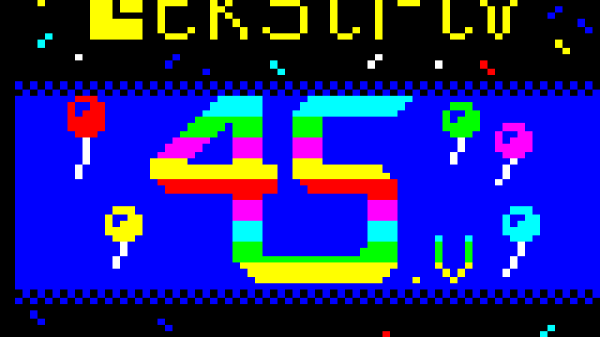
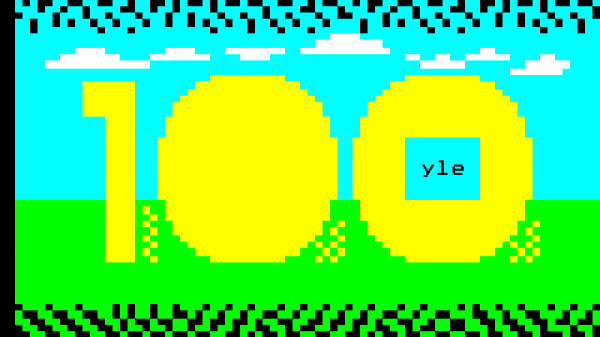
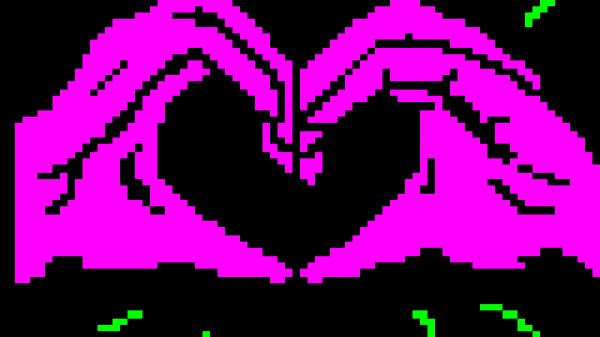
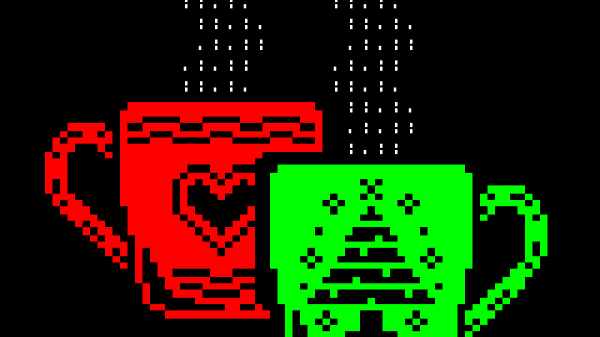
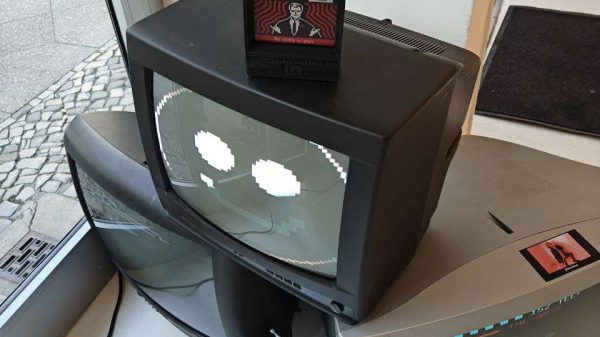
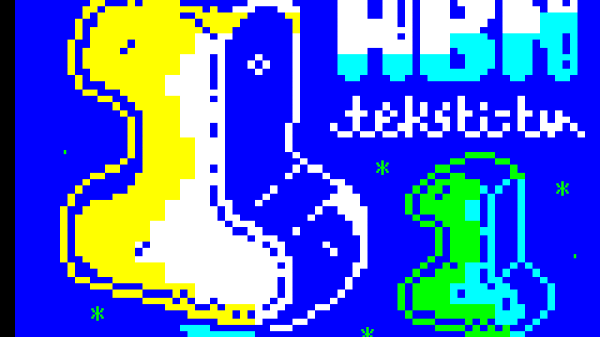
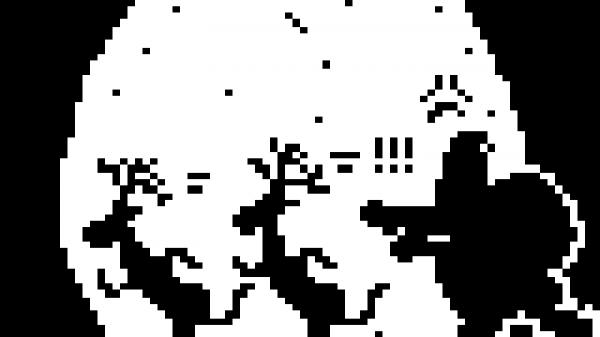
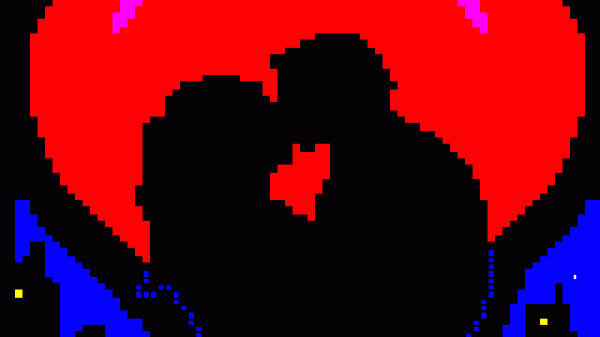
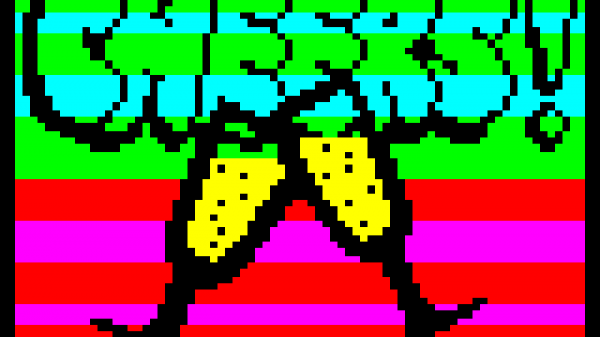
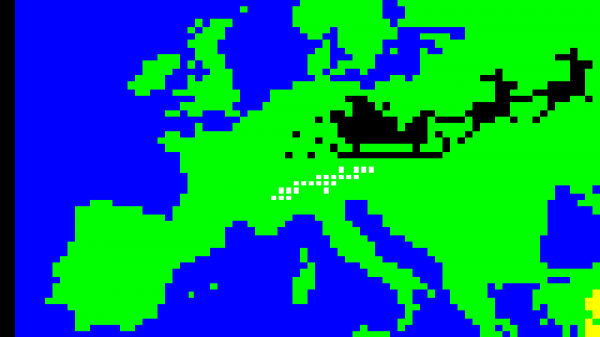
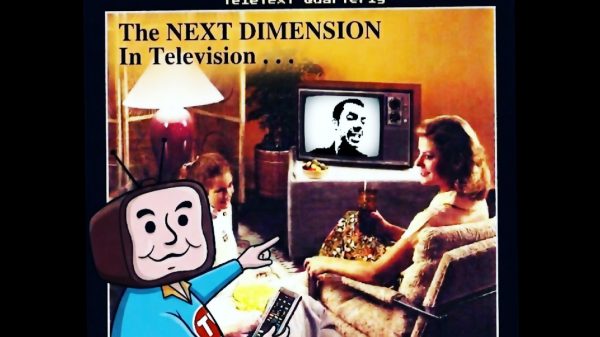


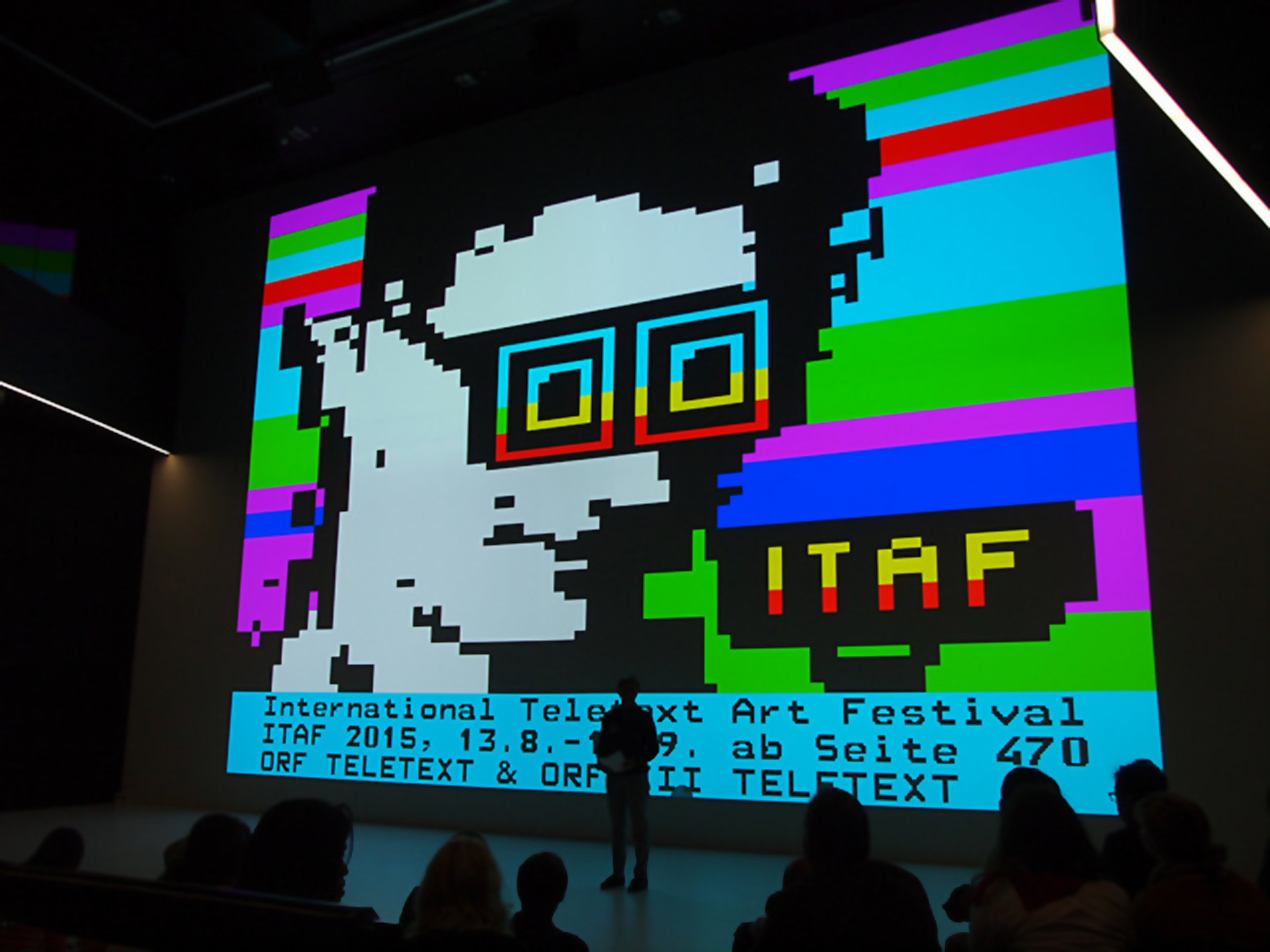
The International Teletext Art Festival (ITAF) was founded in 2012 by Finnish artists’ co-operative FixC, who primarily focus on moving image.
Inspired by Lektrolab’s Microtel project, it invited artists to use the Cebra Text editor, “explore teletext’s creative aspects” and have their works broadcast on public teletext. According to FixC, it enabled teletext art to be “experienced in millions of private homes which makes it one of the biggest media art events in the world.”
Speaking in 2013, ITAF organiser and curator Juha Van Ingen admitted that the festival began as something of a joke. While FixC were discussing how to show animations to a new audience, someone mentioned teletext. “After first having a good laugh”, he said, “we started to realise that it could actually be a very interesting platform.” He went on to say that they always “tried to maintain a broad range of artistic expression in the project,” leaving the discourses “very much in the hands of the individual artists.”
From the start, the festival’s ethos was to bring art to a wider audience. Prior to ITAF 2014, Juha Van Ingen told the BBC, “In my view, the true place to see teletext art is in your home, and in a way our festival turns every home into an art gallery, and you can reach it by just pressing a button on your remote control.”
Finnish public broadcaster Yle Text also played a part in the festival’s creation, with organisers getting a chance to make some teletext art at Yle’s offices. The service would broadcast the first ITAF in 2012.
Speaking in 2020, Jarkko Räsänen of FixC said that it was because of “the vision and understanding” of Yle Text’s editor-in-chief Matti Rämö that ITAF came to be. He offered them the opportunity to exhibit on the service, and from that FixC “organised an art exhibition for the opening of the festival.” However, they then realised they had to “really find out how to make” teletext art, and at this point they found the Microtel project, which became a reference for their own festival.
ITAF ran for four years, exhibiting on various teletext services and physical galleries around Europe.
ITAF 2012
In 2012, FixC put out an open call for the International Teletext Art Festival. The exhibition was broadcast on Yle Text in Finland in March and April 2012, then later screened on ARD Text, and at XL Art Space and the Pflueger68 gallery in Berlin during August and September 2012.
The first iteration of ITAF was influential, spreading awareness of the medium as an artform. Entrants included members of the FixC collective, as well as prominent demoscene artists such as Raquel Meyers, Janne Suni and Fredrik Olsson. Meyers in particular would go on to embrace teletext art as part of her practice, submitting for future teletext art exhibitions, writing research papers and running her own workshops teaching about the format.
ITAF 2013
ITAF returned for its second edition in 2013, this time screened on three services: ARD Text (Germany), ORF Text (Austria) and SWISS Text (Switzerland). It was opened on 15 August 2013 at the ARD Hauptstadtstudio exhibition space, which showed the artworks for a month, before the exhibition moved to Filmkunstbar Fitzcarraldo.
The ITAF13 artworks were also shown at the Ars Electronica Festival in Linz, Austria, in September 2013.
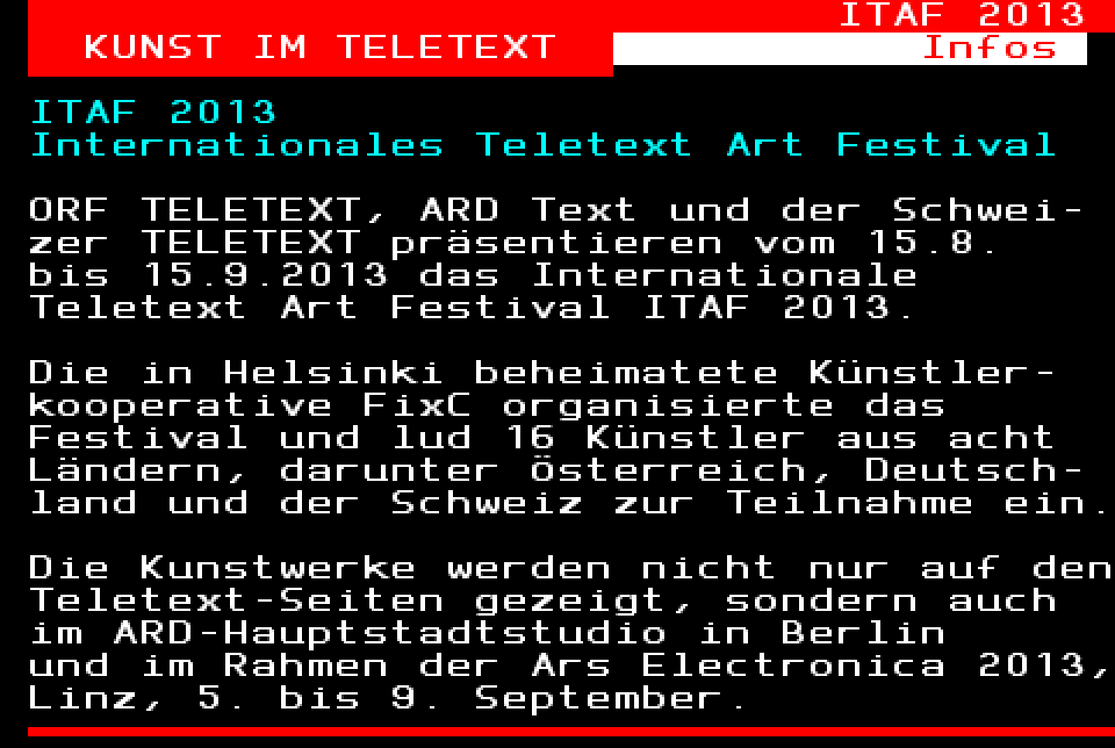
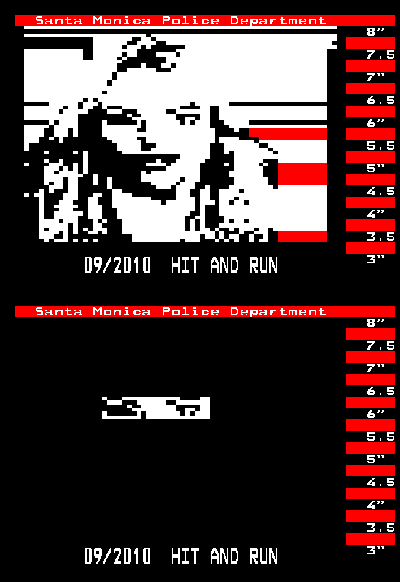
This and all subsequent iterations of ITAF were in competition format, with a panel of judges deciding the Teletext Prize Award, and a People’s Choice Award voted by viewers. Kathrin Günter‘s Lindsay Lohan’s Mug Shot Cabinet won first prize, with honorary mentions going to Raquel Meyers, Daniel Egg and Dragan Espenschied. The People’s Choice winners were Dragan Espenschied’s Lucky Cat and John Lawrence’s Connecting People animation.
Paul B Davis was among the judges, with Rosa Menkman and Voin de Voin making up the complete panel.
Swedish text mode researcher and musician Goto80 also unveiled his piece Remote Control Music Studio at the festival.
ITAF 2014
The third ITAF was staged on ORF Teletext, Swiss Teletext and Arte Text in August and September 2014. Debuting on 14 August at Rundfunk Berlin-Brandenburg (rbb), the artworks were exhibited alongside printed versions of selected works from previous iterations of the festival. They were additionally shown at a pop-up gallery at IFA Berlin.
This year, viewers were encouraged to take part in ITAF in the House by photographing the artworks in situ around their home and in public spaces. Selected photos were shown on the ITAF website and Tumblr account, with branded tote bags mailed to those who were published. These images were also exhibited “during the festival at the Museum Quarter in Vienna and the ITAF finnisage in FISH Helsinki.”
Speaking to Hyperallergic in August 2014, participant Kim Asendorf said, “teletext really feels like a part of my youth, and like the youth of digital technology.” In the same article, Dan Farrimond cited his affinity for “’80s low-res video game aesthetics” as an inspiration for his teletext work.
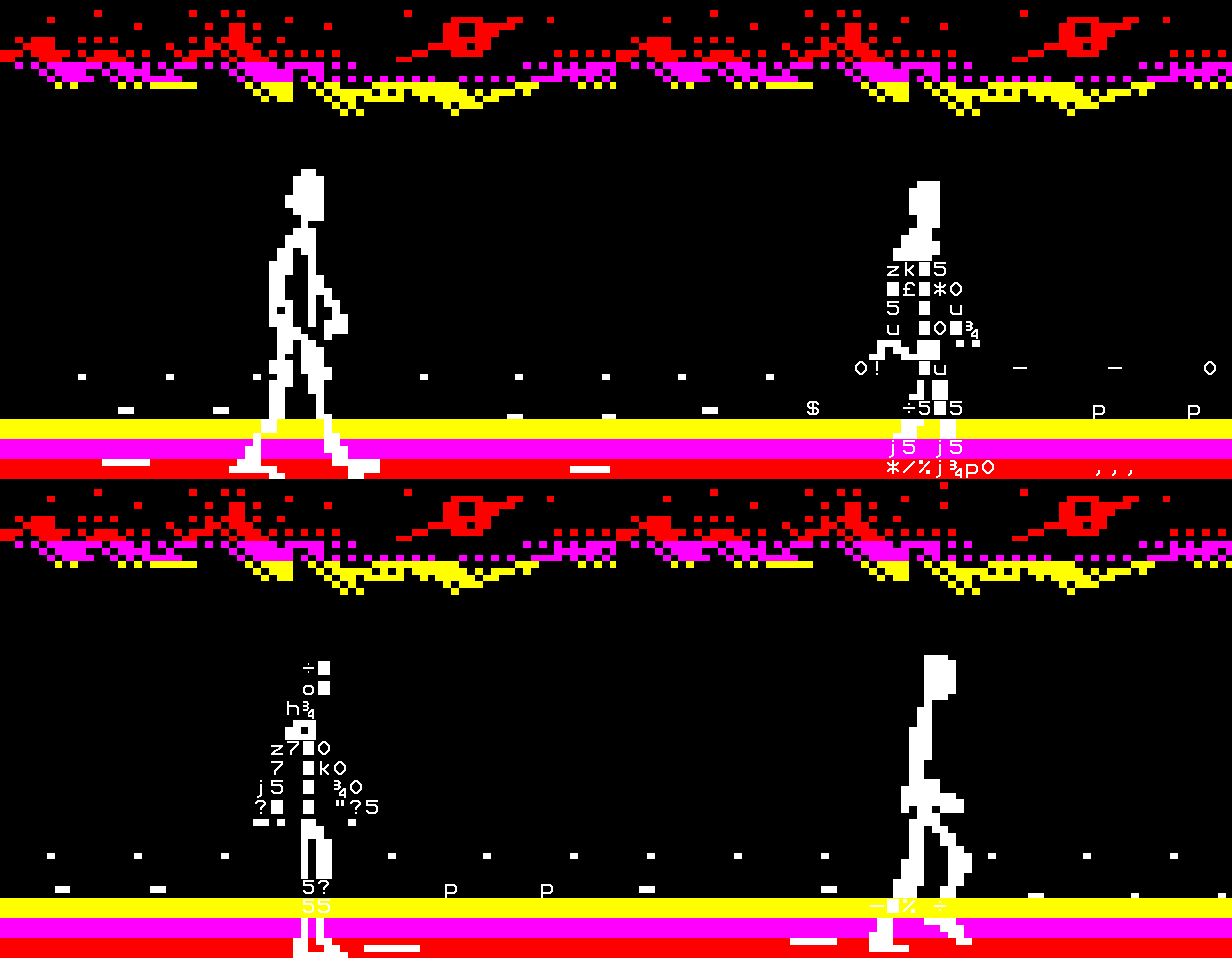
A total of 24 artists took part, each limited to five pages. Judges Kathrin Günter and Erkki Huhtamo awarded the Teletext Art Prize to Dan Farrimond for TXTPunk, and the Special Teletext Achievement Award to Raquel Meyers for Thread of Fate.
Alongside ITAF14, FixC launched their new project, the Museum of Teletext Art, with the purpose of broadcasting, documenting and archiving teletext art (in the VILKE art collection) and “make it available for studies and research.” It would receive a permanent page on Yle Text and organise numerous exhibitions with artworks donated to the museum.
ITAF 2015
The final International Teletext Art Festival of the 2010s was broadcast on ORF Teletext, Swiss Text and Arte Teletext from 13 August to 13 September 2015. It was also exhibited at Ars Electronica 2015 “Post City” in Linz, Austria from 3-7 September.
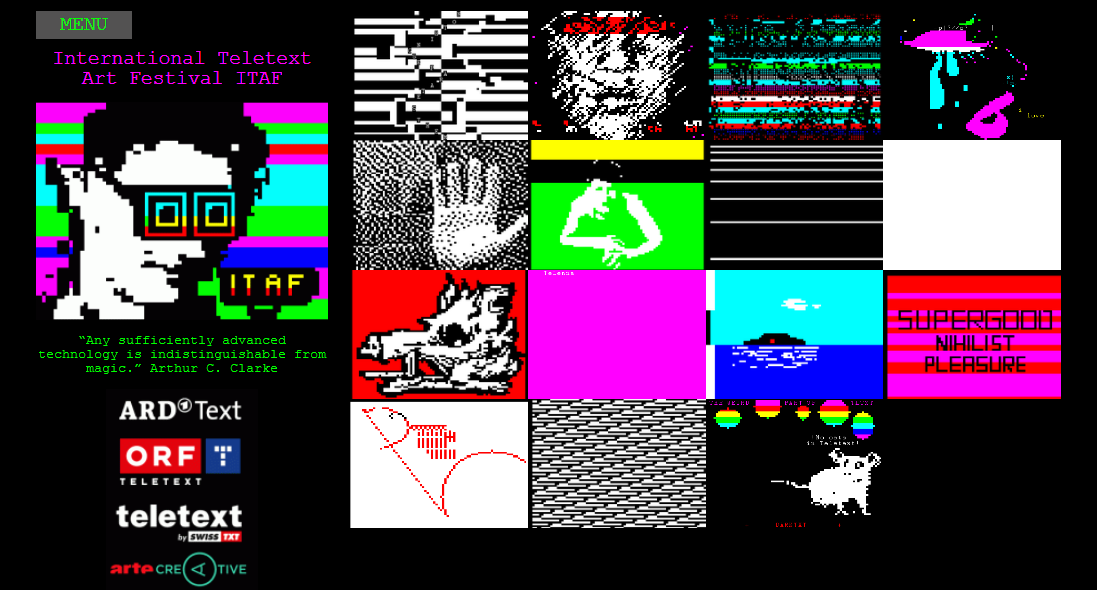
This edition encouraged the public to ‘stay home’ and invite friends, “dressing up teletext style or cooking a teletext dinner.” The organisers set up a Tumblr blog to document people’s experiences of the festival, with featured photographs once again presented at the ITAF finnisage at the FISH Gallery, Helsinki.
15 artists/groups competed for the 2015 Teletext Art Prize, and the panel of judges consisted of Dan Farrimond, Raquel Meyers and critic, curator and writer Pontus Kyander. German generative artist Holger Lippmann was awarded the grand prize for Teletext Field (1-5), which “[retained] a controlled glitchiness … rooted in the “fields of minimal, electronic and computer art.”
The Teletext Achievement Award was given to Max Capacity for the “long term coherence of his teletext graphics.” The “Jury’s Picks” were Karin Ferrari (Dark Text), Christina Kramer (Wenn jemand nach mir fragt: ich bin auf der Flucht) and Paula Lehtonen (Escape).
Sources
- The International Teletext Art Festival ITAF2015, teletextart.com
- The International Teletext Art Festival Brings New Media to the Living Room, Blouin Artinfo, 22 August 2013
- Pretty Pixels: Teletext Art, BBC World Service, 13 August 2014
- Teletext R Podcast, 5 May 2020 – In conversation with Jarkko Räsänen: teletext art festivals and museums
- ITAF Yle 2012, teletextart.com, accessed 8 March 2026
- Teletext Unplugged, Wired Magazine, July 2012
- International Teletext Art Festival 2012-2014, teletextart.com, accessed 8 March 2026
- The Block Party Returns, Grafismo, ISSN 2386-6950, Dan Farrimond, 25 July 2015
- Teletext is Resistance Workshop, Raquel Meyers, raquelmeyers.com, April 2025.
- Teletext festival breathes life into old tech, BBC, 7 July 2014
- ITAF in the House archived from the original, teletextart.com, accessed 13 March 2026
- The Retro Aesthetics of Teletext Art, Claire Voon, 14 August 2014
- A British artist wins the teletext art prize, rts.ch, 14 September 2014
- Museum of Teletext Art MUTA, teletextart.com
- Deep Space 8K: The International Teletext Art Festival – ITAF 2015, Ars Electronica
- ITAF 2015 Tumblr blog, accessed 13 March 2026
- International Teletext Art Prize 2015, teletextart.com, accessed 14 March 2026




Recent Comments